


- Retrait en 2 heures
- Assortiment impressionnant
- Paiement sécurisé
- Toujours un magasin près de chez vous
- Retrait en 2 heures
- Assortiment impressionnant
- Paiement sécurisé
- Toujours un magasin près de chez vous



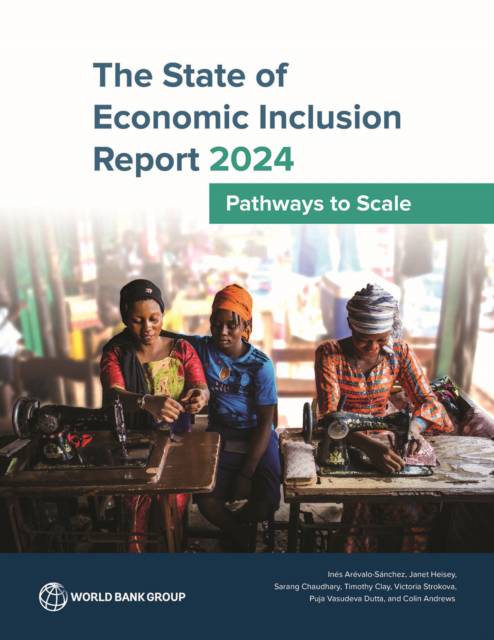
The State of Economic Inclusion Report 2024
Pathways to Scale
Inés Arévalo Sánchez, Janet Heisey, Sarang Chaudhary, Timothy Clay, Victoria Strokova, Puja Vasudeva Dutta, Colin Andrews
Livre broché | Anglais
65,45 €
+ 130 points
Description
The journey of economic inclusion programs has been remarkable, marked by significant strides in creating job opportunities and building resilience for poor and vulnerable populations. The State of Economic Inclusion Report 2024: Pathways to Scale highlights the progress and challenges of scaling up government-led programs, as well as the vital interplay with nongovernment actors and the private sector. The report draws on the 2023 Landscape Survey of Economic Inclusion Programs and on the operational insights garnered through the Partnership for Economic Inclusion's (PEI's) collaboration with its partners, summarizing emerging evidence from government-led programs, highlighting significant knowledge gaps, and offering insights for future programmatic approaches. This report offers a comprehensive overview of the evolving landscape, global footprint, and key design features of economic inclusion programs. Comparisons with The State of Economic Inclusion Report 2021 provide valuable insights into shifts and trends over the past 3 years, including those for the economic empowerment of women and youth, for collaborative efforts across different stakeholders, and for resilience to climate change. The current report complements the earlier report by exploring efforts to scale up policy and programming, including progress and challenges around government-led programs and the interplay with nongovernment actors and the private sector. This report analyzes shifts in the global landscape, including the degree to which economic inclusion programs are being customized in vastly different contexts and the growing role of economic inclusion in building resilience and providing job opportunities to the poor population in the context of overlapping crises. Scaling up programs that empower poor and vulnerable populations to access economic opportunities, enhance food security, and build both short- and long-term resilience can contribute to more-inclusive and more-sustainable growth that leaves no one behind. This report provides policy makers with key recommendations for expanding coverage, strengthening outcomes for women and youth, maintaining program quality, continuing to build an evidence base, and designing programs for sustainable impacts. Data from the report are available on the PEI Data Portal, www.peiglobal.org, where users can explore and submit data.
Spécifications
Parties prenantes
- Auteur(s) :
- Editeur:
Contenu
- Nombre de pages :
- 232
- Langue:
- Anglais
Caractéristiques
- EAN:
- 9781464820762
- Date de parution :
- 22-01-25
- Format:
- Livre broché
- Format numérique:
- Trade paperback (VS)
- Dimensions :
- 216 mm x 279 mm
- Poids :
- 752 g


Seulement chez Librairie Club
+ 130 points sur votre carte client de Librairie Club
Cadeau


Les avis
Nous publions uniquement les avis qui respectent les conditions requises. Consultez nos conditions pour les avis.