


- Retrait en 2 heures
- Assortiment impressionnant
- Paiement sécurisé
- Toujours un magasin près de chez vous
- Retrait en 2 heures
- Assortiment impressionnant
- Paiement sécurisé
- Toujours un magasin près de chez vous



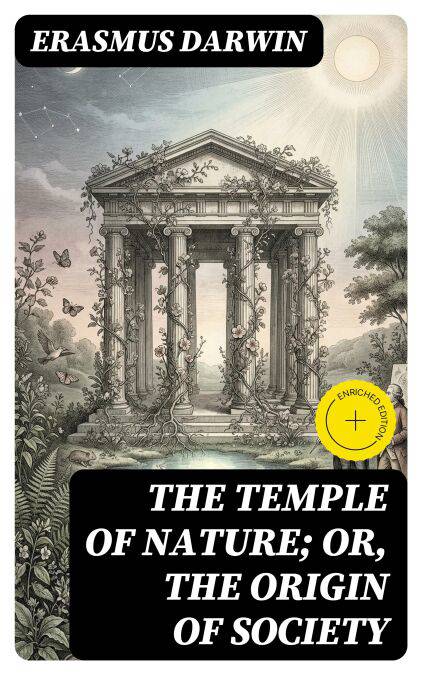
The Temple of Nature; or, the Origin of Society EBOOK
Enriched edition. A Poem, with Philosophical Notes
Erasmus Darwin
Ebook | Anglais
1,99 €
+ 1 points
Format
Description
In "The Temple of Nature; or, the Origin of Society," written in 1796, Erasmus Darwin delves into the interconnectedness of life and the evolution of society through a poetic lens. This work synthesizes the scientific ideas of his time, drawing upon his background in natural philosophy, botany, and medicine to articulate a vision of organic development. With an unmistakable Romantic style, Darwin's lush imagery and metaphorical language invite readers to contemplate the natural world and humanity's place within it, while also foreshadowing the burgeoning debates on evolution and natural selection that would emerge in the following century. Erasmus Darwin, a prominent figure in the Lunar Society of Birmingham, was deeply influenced by Enlightenment thought and the early stirrings of evolutionary theory. His extensive knowledge in various scientific fields, alongside his familial connections to Charles Darwin, shaped his perspective on the natural world as a dynamic, interrelated system. His advocacy for progressive social thought and reforms in education and medicine reflects his commitment to harnessing science for the betterment of society. For readers interested in the intersection of science, poetry, and philosophy, "The Temple of Nature" offers a profound exploration of the origins of life and society. Darwin's visionary insights not only lay the groundwork for future scientific discourse but also resonate with contemporary discussions about humanity's relationship with nature, making this work a timeless and essential read.
In this enriched edition, we have carefully created added value for your reading experience:
- A succinct Introduction situates the work's timeless appeal and themes.
- The Synopsis outlines the central plot, highlighting key developments without spoiling critical twists.
- A detailed Historical Context immerses you in the era's events and influences that shaped the writing.
- A thorough Analysis dissects symbols, motifs, and character arcs to unearth underlying meanings.
- Reflection questions prompt you to engage personally with the work's messages, connecting them to modern life.
- Hand‐picked Memorable Quotes shine a spotlight on moments of literary brilliance.
- Interactive footnotes clarify unusual references, historical allusions, and archaic phrases for an effortless, more informed read.
In this enriched edition, we have carefully created added value for your reading experience:
- A succinct Introduction situates the work's timeless appeal and themes.
- The Synopsis outlines the central plot, highlighting key developments without spoiling critical twists.
- A detailed Historical Context immerses you in the era's events and influences that shaped the writing.
- A thorough Analysis dissects symbols, motifs, and character arcs to unearth underlying meanings.
- Reflection questions prompt you to engage personally with the work's messages, connecting them to modern life.
- Hand‐picked Memorable Quotes shine a spotlight on moments of literary brilliance.
- Interactive footnotes clarify unusual references, historical allusions, and archaic phrases for an effortless, more informed read.
Spécifications
Parties prenantes
- Auteur(s) :
- Editeur:
Contenu
- Nombre de pages :
- 259
- Langue:
- Anglais
Caractéristiques
- EAN:
- 8596547359524
- Date de parution :
- 15-09-22
- Format:
- Ebook
- Protection digitale:
- Digital watermarking
- Format numérique:
- ePub


Seulement chez Librairie Club
+ 1 points sur votre carte client de Librairie Club
Cadeau


Les avis
Nous publions uniquement les avis qui respectent les conditions requises. Consultez nos conditions pour les avis.