Club utilise des cookies et des technologies similaires pour faire fonctionner correctement le site web et vous fournir une meilleure expérience de navigation.
Ci-dessous vous pouvez choisir quels cookies vous souhaitez modifier :
Club utilise des cookies et des technologies similaires pour faire fonctionner correctement le site web et vous fournir une meilleure expérience de navigation.
Nous utilisons des cookies dans le but suivant :
Assurer le bon fonctionnement du site web, améliorer la sécurité et prévenir la fraude
Avoir un aperçu de l'utilisation du site web, afin d'améliorer son contenu et ses fonctionnalités
Pouvoir vous montrer les publicités les plus pertinentes sur des plateformes externes
Club utilise des cookies et des technologies similaires pour faire fonctionner correctement le site web et vous fournir une meilleure expérience de navigation.
Ci-dessous vous pouvez choisir quels cookies vous souhaitez modifier :
Cookies techniques et fonctionnels
Ces cookies sont indispensables au bon fonctionnement du site internet et vous permettent par exemple de vous connecter. Vous ne pouvez pas désactiver ces cookies.
Cookies analytiques
Ces cookies collectent des informations anonymes sur l'utilisation de notre site web. De cette façon, nous pouvons mieux adapter le site web aux besoins des utilisateurs.
Cookies marketing
Ces cookies partagent votre comportement sur notre site web avec des parties externes, afin que vous puissiez voir des publicités plus pertinentes de Club sur des plateformes externes.
Une erreur est survenue, veuillez réessayer plus tard.
Il y a trop d’articles dans votre panier
Vous pouvez encoder maximum 250 articles dans votre panier en une fois. Supprimez certains articles de votre panier ou divisez votre commande en plusieurs commandes.
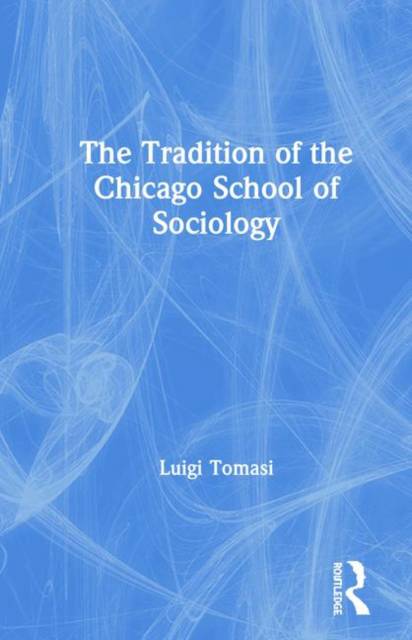
The value of the book lies in its reassessment of the distinctive features of the Chicago School, of its contributions in the theoretical and methodological fields and of its influence on the growth of sociology throughout the world and in America in particular. The book pays particularly close attention to the eclectic nature of the research methods used by the Chicago sociologists as they sought to integrate subjective and objective aspects of human life. It demonstrates that this eclecticism formed an integral part of their theories but also emphasises that empirical observation, too, was important, although not as an end in itself. While, for example, they were working on the concepts of organization, marginality and interaction, they did not consider these as ends in themselves but as additions to the development of a more general theoretical approach. Often in the past, and wrongly, Chicago's theoretical contribution has been restricted to the urban sector. The book clearly and unequivocally reveals how the tendency to see the Chicago School as a 'theoretical' is the result of misinterpretation and of a failure to realize that, for the sociologists of the period, understanding the social dynamics of the city of Chicago was tantamount to interpreting the central tendencies of modern society itself. The book analyzes how empirical observation was important but not an end in itself. The Chicago School developed a profusion of sociological theories in many areas of inquiry and never opted for any one particular approach. The various essays in the book also make it clear that the School decisively contributed to the development of qualitative and quantitative techniques.