


- Retrait en 2 heures
- Assortiment impressionnant
- Paiement sécurisé
- Toujours un magasin près de chez vous
- Retrait en 2 heures
- Assortiment impressionnant
- Paiement sécurisé
- Toujours un magasin près de chez vous



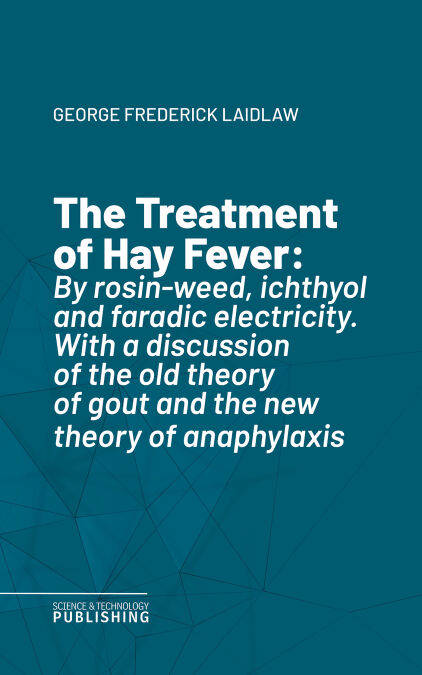
The Treatment of Hay Fever EBOOK
By rosin-weed, ichthyol and faradic electricity. With a discussion of the old theory of gout and the new theory of anaphylaxis
Laidlaw
Ebook | Anglais
19,99 €
+ 19 points
Description
The Treatment of Hay Fever By Rosin-Weed, Ichthyol and Faradic Electricity is a comprehensive medical treatise authored by George Frederick Laidlaw, M.D., exploring innovative approaches to the management and alleviation of hay fever, a condition that has long perplexed both patients and practitioners. Drawing upon his clinical experience and the latest scientific research of his era, Dr. Laidlaw delves into the therapeutic potential of rosin-weed (Grindelia robusta), ichthyol, and the application of faradic electricity, offering detailed case studies, dosage recommendations, and practical guidance for physicians. The book is notable for its critical examination of prevailing medical theories, particularly the traditional gout theory of hay fever, which posited a connection between the condition and uric acid diathesis. Dr. Laidlaw contrasts this with the emerging anaphylaxis theory, which recognizes hay fever as an allergic reaction, thus anticipating modern understandings of immunology and hypersensitivity. Through a careful review of historical literature, personal observations, and experimental results, the author provides a nuanced discussion of the etiology, symptoms, and seasonal patterns of hay fever. In addition to its clinical focus, the book offers a fascinating glimpse into the evolution of medical thought at the turn of the twentieth century, highlighting the transition from speculative theories to evidence-based practice. Dr. Laidlaw's writing is both accessible and authoritative, making this work an invaluable resource for medical historians, practitioners interested in the history of allergy treatment, and anyone seeking insight into the early scientific efforts to combat hay fever.
Spécifications
Parties prenantes
- Auteur(s) :
- Editeur:
Contenu
- Langue:
- Anglais
Caractéristiques
- EAN:
- 9782528108864
- Date de parution :
- 31-08-25
- Format:
- Ebook
- Protection digitale:
- /
- Format numérique:
- ePub


Seulement chez Librairie Club
+ 19 points sur votre carte client de Librairie Club
Cadeau


Les avis
Nous publions uniquement les avis qui respectent les conditions requises. Consultez nos conditions pour les avis.