


- Retrait en 2 heures
- Assortiment impressionnant
- Paiement sécurisé
- Toujours un magasin près de chez vous
- Retrait en 2 heures
- Assortiment impressionnant
- Paiement sécurisé
- Toujours un magasin près de chez vous



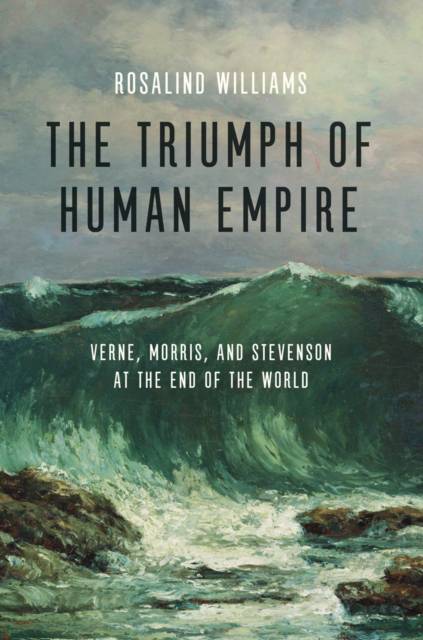
The Triumph of Human Empire
Verne, Morris, and Stevenson at the End of the World
Rosalind Williams
Livre relié | Anglais
44,95 €
+ 89 points
Description
In the early 1600s, in a haunting tale titled New Atlantis, Sir Francis Bacon imagined the discovery of an uncharted island. This island was home to the descendants of the lost realm of Atlantis, who had organized themselves to seek "the knowledge of Causes, and secret motions of things; and the enlarging of the bounds of Human Empire, to the effecting of all things possible." Bacon's make-believe island was not an empire in the usual sense, marked by territorial control; instead, it was the center of a vast general expansion of human knowledge and power. Rosalind Williams uses Bacon's island as a jumping-off point to explore the overarching historical event of our time: the rise and triumph of human empire, the apotheosis of the modern ambition to increase knowledge and power in order to achieve world domination. Confronting an intensely humanized world was a singular event of consciousness, which Williams explores through the lives and works of three writers of the late nineteenth century: Jules Verne, William Morris, and Robert Louis Stevenson. As the century drew to a close, these writers were unhappy with the direction in which their world seemed to be headed and worried that organized humanity would use knowledge and power for unworthy ends. In response, Williams shows, each engaged in a lifelong quest to make a home in the midst of human empire, to transcend it, and most of all to understand it. They accomplished this first by taking to the water: in life and in art, the transition from land to water offered them release from the condition of human domination. At the same time, each writer transformed his world by exploring the literary boundary between realism and romance. Williams shows how Verne, Morris, and Stevenson experimented with romance and fantasy and how these traditions allowed them to express their growing awareness of the need for a new relationship between humans and Earth. The Triumph of Human Empire shows that for these writers and their readers romance was an exceptionally powerful way of grappling with the political, technical, and environmental situations of modernity. As environmental consciousness rises in our time, along with evidence that our seeming control over nature is pathological and unpredictable, Williams's history is one that speaks very much to the present.
Spécifications
Parties prenantes
- Auteur(s) :
- Editeur:
Contenu
- Nombre de pages :
- 432
- Langue:
- Anglais
Caractéristiques
- EAN:
- 9780226899558
- Date de parution :
- 30-09-13
- Format:
- Livre relié
- Format numérique:
- Genaaid
- Dimensions :
- 155 mm x 231 mm
- Poids :
- 739 g


Seulement chez Librairie Club
+ 89 points sur votre carte client de Librairie Club
Cadeau


Les avis
Nous publions uniquement les avis qui respectent les conditions requises. Consultez nos conditions pour les avis.