


En raison d'une grève chez bpost, des retards de livraison peuvent survenir. Besoin de quelque chose en urgence ? Optez pour un retrait en magasin ou rendez-vous dans une Librairie Club à proximité.
- Retrait en 2 heures
- Assortiment impressionnant
- Paiement sécurisé
- Toujours un magasin près de chez vous
En raison d'une grève chez bpost, des retards de livraison peuvent survenir. Besoin de quelque chose en urgence ? Optez pour un retrait en magasin ou rendez-vous dans une Librairie Club à proximité.
- Retrait en 2 heures
- Assortiment impressionnant
- Paiement sécurisé
- Toujours un magasin près de chez vous



70,00 €
+ 140 points
Description
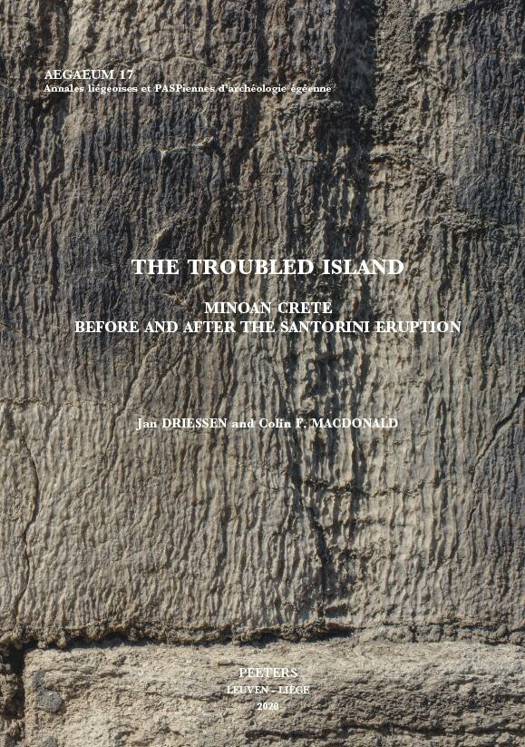
Our thesis is that the archaeological evidence suggests a severe economic dislocation during the Late Minoan IB ceramic period in Crete. This appears to have been triggered, first by a tectonic earthquake and shortly afterwards by the eruption of Thera early in the Late Bronze Age (Late Minoan IA) after which the situation gradually worsened, accompanied by a general feeling of uncertainty caused by the eruption and its effects. The tectonic earthquake led to abandonments at some sites or an effort to rebuild in attempt to re-establish normal economic and social life. The result of these two natural disasters gave local centers greater independence from the traditional "Palaces". This fragmentation of Minoan Crete brought about the end of the most highly developed economic system in the Aegean although it was somewhat resurrected in the following "Mycenaean" period. The natural events which proved to be the catalysts for change, presaged the end of the traditional ruling elites which appeared to have lost their assumed divine support. They tried in vain to maintain their special status, but with major problems in food production and distribution, the existing system disintegrated resulting in a process of decentralisation with an increase in the regional exploitation of land chiefly for local consumption; numerous lesser elites may well have prospered in this environment. However, as in the Hellenistic period, the fragmentation of Crete into many small centres may have led to internal Cretan conflict and a massive wave of fire destructions in Late Minoan IB, indicating a state of anarchy by the end of the period. That Mycenaeans from Mainland Greece arrived on the island at some stage during the Late Bronze Age is clear, although precisely when they arrived is a matter of fierce debate. The "crisis years" of LM IB-II, in the fifteenth century B.C., appear the most likely and opportune. During the succeeding "Mycenaean" period, only the Palace at Knossos seems to have functioned as a major centre. During LM II-III, there was a gradual but general decrease in the sophistication of architecture and arts. The LM II period may perhaps be regarded as the final phase of decline which began in LM IB, with some major centres suffering destructions once again. By Late Minoan II, a new Knossian elite or dynasty appears to have taken control and installed a modified socio-political and economic system. The dynasty relied heavily on administration and bureaucraty to maintain its position. The Santorini eruption is here given the role of a precipitant or catalyst, which began an entire series of changes which eventually resulted in the absorption of Minoan Crete into the Mycenaean, and ultimately, the Greek world.
Spécifications
Parties prenantes
- Auteur(s) :
- Editeur:
Contenu
- Nombre de pages :
- 284
- Langue:
- Anglais
- Collection :
- Tome:
- n° 17
Caractéristiques
- EAN:
- 9789042924161
- Date de parution :
- 23-06-20
- Format:
- Livre broché
- Format numérique:
- Trade paperback (VS)
- Dimensions :
- 203 mm x 287 mm
- Poids :
- 780 g


Seulement chez Librairie Club
+ 140 points sur votre carte client de Librairie Club
Cadeau


Les avis
Nous publions uniquement les avis qui respectent les conditions requises. Consultez nos conditions pour les avis.