


- Retrait en 2 heures
- Assortiment impressionnant
- Paiement sécurisé
- Toujours un magasin près de chez vous
- Retrait en 2 heures
- Assortiment impressionnant
- Paiement sécurisé
- Toujours un magasin près de chez vous



33,45 €
+ 66 points
Description
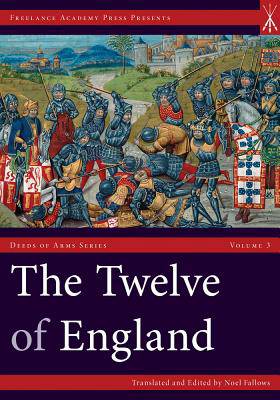
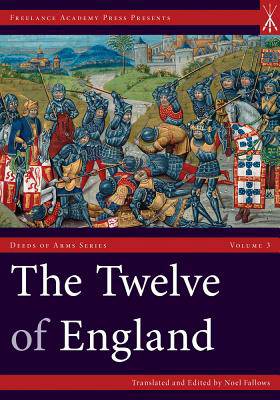
In the waning years of the fourteenth century, the household of John of Gaunt, the Duke of Lancaster was scandalized when twelve petulant English knights publicly mocked the twelve ladies-in-waiting to the Duke's wife, calling them ugly to their faces. Outraged, the ladies sought immediate redress, but so fearsome were the knights' reputations that none would step forward. Desperate for help, the Duke appealed to his son-in-law King Joao I of Portugal to find champions ready to fight for the ladies' honor. Enter the "Twelve of England," a band of battle-hardened Portuguese knights. Led by the redoubtable Alvaro Goncalves Coutinho, known as "Magrico," or "The Lean One," these twelve fearless men set out for England to fight the English knights in judicial combat, prepared to shed their blood to save the honor of ladies they had never met. Such tales of valor and derring-do, which often hinge on the notion of a team of warriors venturing into hostile territory on a quest for vengeance or redress set against a sweeping historical backdrop, have captured the imagination of audiences through the ages, from Jason and the Argonauts to Lieutenant Aldo Raine and the "Inglorious Basterds." Although undoubtedly a fictional tale inserted into historical reality, the action does not end at the household of the Duke of Lancaster, and other adventures ensue in France, Germany, and Burgundy, as the twelve heroes spread the fame of Portuguese chivalry throughout the great courts of Europe. The third volume of the Deeds of Arms series presents a complete translation of the earliest known version of the Twelve of England, which has survived in only one manuscript. Professor Fallows presents the text in both the medieval Portuguese and an accompanying English translation. A facsimile of the original manuscript and an extensive introduction covering the historical context of both the text and the deeds it discusses are also included. An overview of the arms and armor used by the combatants, color illustrations, genealogical tables, maps, and a comprehensive bibliography further complement the text.
Spécifications
Parties prenantes
- Auteur(s) :
- Editeur:
Contenu
- Nombre de pages :
- 106
- Langue:
- Anglais
- Collection :
- Tome:
- n° 3
Caractéristiques
- EAN:
- 9781937439040
- Date de parution :
- 30-09-13
- Format:
- Livre broché
- Format numérique:
- Trade paperback (VS)
- Dimensions :
- 177 mm x 254 mm
- Poids :
- 312 g


Seulement chez Librairie Club
+ 66 points sur votre carte client de Librairie Club
Cadeau


Les avis
Nous publions uniquement les avis qui respectent les conditions requises. Consultez nos conditions pour les avis.