


- Retrait en 2 heures
- Assortiment impressionnant
- Paiement sécurisé
- Toujours un magasin près de chez vous
- Retrait en 2 heures
- Assortiment impressionnant
- Paiement sécurisé
- Toujours un magasin près de chez vous



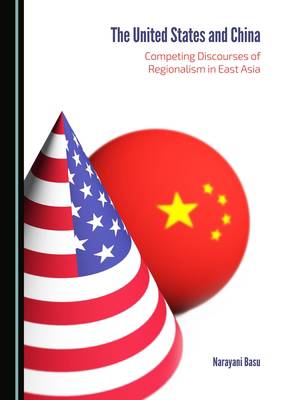
The United States and China
Competing Discourses of Regionalism in East Asia
Narayani Basu
Livre relié | Anglais
142,45 €
+ 284 points
Description
With its long history of internal divisiveness and its intersecting cultural and linguistic cleavages, East Asia is undoubtedly a complex area. However, the idea of East Asia as a regional entity is one that is relatively recent -- a concept that gained momentum after the financial crisis that rocked the region in the 1990s. In recent years, East Asia has become considerably more interdependent, connected and cohesive. This increased cohesiveness has been driven by a dense network of trade and investments, technology sharing and communication, among many other variables and has been reflected in the increasing institutionalisation of regional mechanisms like the ASEAN. Regionalism is not, however, entirely about economic interdependence. In today's day and age, it means not only overarching social networks and a regional identity, but also strategic thinking that recognises common security interests. This book takes into account the regional discourses of two of East Asia's biggest players -- the United States and China. While the former has been a power to reckon with, albeit 'externally', deeply entrenched in the region since the end of the Second World War, the rise of China in the 21st century and its emergence as the largest power in East Asia has brought a new perspective to East Asian regionalism. In 2010, the United States began reasserting itself in East Asia, bringing into sharp focus the ideological differences between itself and China as each vied to shape the architecture of East Asian security. There is no doubt that heightened American interest comes at a time when China's own views of regionalism have become noticeably less cooperative. While balance of power politics is one way to look at the geopolitical tug-of-war in East Asia, there are questions that have not yet been answered. How do the two countries look at a region that is so important for them? How has that perception influenced their foreign policy within the same arena? More importantly, how do they define East Asia? This book studies American and Chinese regional discourses from the end of the Cold War to the present day in order to highlight the rationale behind the natural balance of power politics between an established power and a rising one, and its subsequent effects on security regionalism in East Asia.
Spécifications
Parties prenantes
- Auteur(s) :
- Editeur:
Contenu
- Nombre de pages :
- 225
- Langue:
- Anglais
Caractéristiques
- EAN:
- 9781443872737
- Date de parution :
- 05-05-15
- Format:
- Livre relié
- Format numérique:
- Genaaid
- Dimensions :
- 152 mm x 203 mm
- Poids :
- 539 g


Seulement chez Librairie Club
+ 284 points sur votre carte client de Librairie Club
Cadeau


Les avis
Nous publions uniquement les avis qui respectent les conditions requises. Consultez nos conditions pour les avis.