


- Retrait en 2 heures
- Assortiment impressionnant
- Paiement sécurisé
- Toujours un magasin près de chez vous
- Retrait en 2 heures
- Assortiment impressionnant
- Paiement sécurisé
- Toujours un magasin près de chez vous



29,57 €
+ 29 points
Description
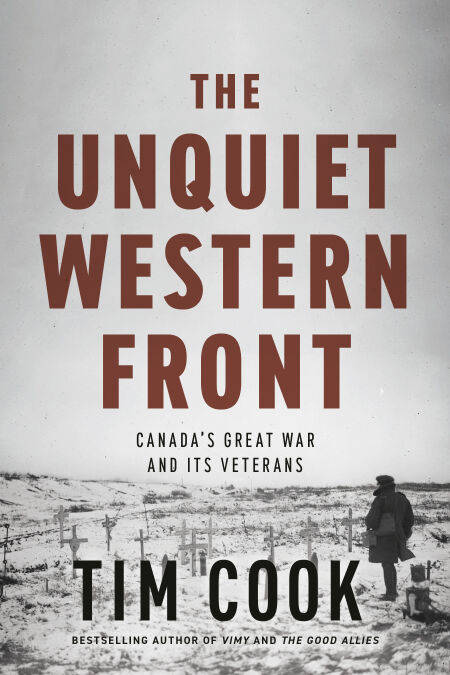
From our country's most important war historian, a vital history of the legacy of the Great War and the reverberating impact it has had on Canada since.
The Western Front has dominated the culture and memory of the Great War. The lethal power of modern weapons in the form of rapid-firing rifles, scything machine guns, and devastating artillery fire lacerated flesh and shattered bone. Finally, on November 11, 1918, the guns went silent when the beaten German forces signed an armistice.
For the young nation of Canada, the war ended with some 66,000 killed and 173,000 wounded. Communities were gutted and survivors reeled and wondered what they would do in the war’s aftermath. Both the victors and vanquished struggled to forge new futures. But still, it was finally over. "All quiet on the Western Front," murmured the survivors.
The memory of the war and the metaphor of an "all quiet" Western Front was an opportunity for the surviving soldiers to escape the war. Nevertheless, the guns barked in nightmares and the dead clutched at the veterans’ minds. None of the soldiers who went to the front and returned were the same. The Unquiet Western Front explores the Great War’s legacies that impacted, transformed, and traumatized Canadians. The book untangles the way that Canadians thought about the war, and how that changed over the years.
The war’s complex and sometimes contradictory legacies, grounded in the Western Front but carried back to Canada, have been constructed and deconstructed for a long time, becoming part of its citizenry’s families, marrow, and blood. In his signature style, Cook explores how the war meant different things at different times, and how its memory was used for varied purposes. The Unquiet Western Front is a comprehensive survey of these great changes, and how they have shaped Canada into the country it is today.
The Western Front has dominated the culture and memory of the Great War. The lethal power of modern weapons in the form of rapid-firing rifles, scything machine guns, and devastating artillery fire lacerated flesh and shattered bone. Finally, on November 11, 1918, the guns went silent when the beaten German forces signed an armistice.
For the young nation of Canada, the war ended with some 66,000 killed and 173,000 wounded. Communities were gutted and survivors reeled and wondered what they would do in the war’s aftermath. Both the victors and vanquished struggled to forge new futures. But still, it was finally over. "All quiet on the Western Front," murmured the survivors.
The memory of the war and the metaphor of an "all quiet" Western Front was an opportunity for the surviving soldiers to escape the war. Nevertheless, the guns barked in nightmares and the dead clutched at the veterans’ minds. None of the soldiers who went to the front and returned were the same. The Unquiet Western Front explores the Great War’s legacies that impacted, transformed, and traumatized Canadians. The book untangles the way that Canadians thought about the war, and how that changed over the years.
The war’s complex and sometimes contradictory legacies, grounded in the Western Front but carried back to Canada, have been constructed and deconstructed for a long time, becoming part of its citizenry’s families, marrow, and blood. In his signature style, Cook explores how the war meant different things at different times, and how its memory was used for varied purposes. The Unquiet Western Front is a comprehensive survey of these great changes, and how they have shaped Canada into the country it is today.
Spécifications
Parties prenantes
- Auteur(s) :
- Editeur:
Contenu
- Nombre de pages :
- 368
- Langue:
- Anglais
Caractéristiques
- EAN:
- 9781037803697
- Date de parution :
- 19-10-26
- Format:
- Ebook
- Protection digitale:
- Adobe DRM
- Format numérique:
- ePub


Seulement chez Librairie Club
+ 29 points sur votre carte client de Librairie Club
Cadeau


Les avis
Nous publions uniquement les avis qui respectent les conditions requises. Consultez nos conditions pour les avis.