


- Retrait en 2 heures
- Assortiment impressionnant
- Paiement sécurisé
- Toujours un magasin près de chez vous
- Retrait en 2 heures
- Assortiment impressionnant
- Paiement sécurisé
- Toujours un magasin près de chez vous



8,09 €
+ 8 points
Description
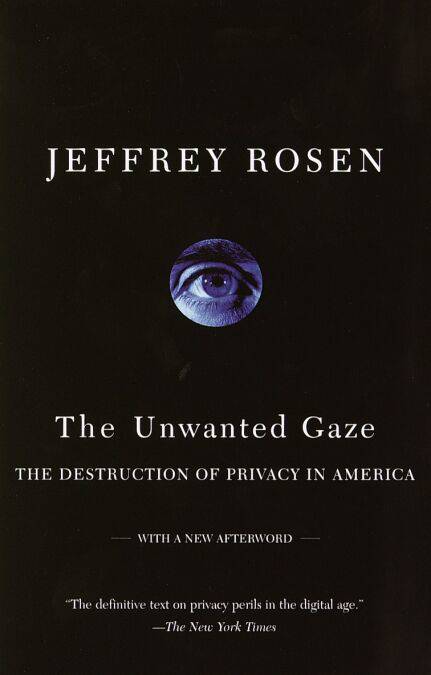
As thinking, writing, and gossip increasingly take place in cyberspace, the part of our life that can be monitored and searched has vastly expanded. E-mail, even after it is deleted, becomes a permanent record that can be resurrected by employers or prosecutors at any point in the future. On the Internet, every website we visit, every store we browse in, every magazine we skim--and the amount of time we skim it--create electronic footprints that can be traced back to us, revealing detailed patterns about our tastes, preferences, and intimate thoughts.
In this pathbreaking book, Jeffrey Rosen explores the legal, technological, and cultural changes that have undermined our ability to control how much personal information about ourselves is communicated to others, and he proposes ways of reconstructing some of the zones of privacy that law and technology have been allowed to invade. In the eighteenth century, when the Bill of Rights was drafted, the spectacle of state agents breaking into a citizen's home and rummaging through his or her private diaries was considered the paradigm case of an unconstitutional search and seizure. But during the impeachment of President Bill Clinton, prosecutors were able to subpoena Monica Lewinsky's bookstore receipts and to retrieve unsent love letters from her home computer. And the sense of violation that Monica Lewinsky experienced is not unique. In a world in which everything that Americans read, write, and buy can be recorded and monitored in cyberspace, there is a growing danger that intimate personal information originally disclosed only to our friends and colleagues may be exposed to--and misinterpreted by--a less understanding audience of strangers.
Privacy is important, Rosen argues, because it protects us from being judged out of context in a world of short attention spans, a world in which isolated bits of intimate information can be confused with genuine knowledge. Rosen also examines the expansion of sexual-harassment law that has given employers an incentive to monitor our e-mail, Internet browsing habits, and office romances. And he suggests that some forms of offensive speech in the workplace--including the indignities allegedly suffered by Paula Jones and Anita Hill--are better conceived of as invasions of privacy than as examples of sex discrimination. Combining discussions of current events--from Kenneth Starr's tapes to DoubleClick's on-line profiles--with inno-vative legal and cultural analysis, The Unwanted Gaze offers a powerful challenge to Americans to be proactive in the face of new threats to privacy in the twenty-first century.
In this pathbreaking book, Jeffrey Rosen explores the legal, technological, and cultural changes that have undermined our ability to control how much personal information about ourselves is communicated to others, and he proposes ways of reconstructing some of the zones of privacy that law and technology have been allowed to invade. In the eighteenth century, when the Bill of Rights was drafted, the spectacle of state agents breaking into a citizen's home and rummaging through his or her private diaries was considered the paradigm case of an unconstitutional search and seizure. But during the impeachment of President Bill Clinton, prosecutors were able to subpoena Monica Lewinsky's bookstore receipts and to retrieve unsent love letters from her home computer. And the sense of violation that Monica Lewinsky experienced is not unique. In a world in which everything that Americans read, write, and buy can be recorded and monitored in cyberspace, there is a growing danger that intimate personal information originally disclosed only to our friends and colleagues may be exposed to--and misinterpreted by--a less understanding audience of strangers.
Privacy is important, Rosen argues, because it protects us from being judged out of context in a world of short attention spans, a world in which isolated bits of intimate information can be confused with genuine knowledge. Rosen also examines the expansion of sexual-harassment law that has given employers an incentive to monitor our e-mail, Internet browsing habits, and office romances. And he suggests that some forms of offensive speech in the workplace--including the indignities allegedly suffered by Paula Jones and Anita Hill--are better conceived of as invasions of privacy than as examples of sex discrimination. Combining discussions of current events--from Kenneth Starr's tapes to DoubleClick's on-line profiles--with inno-vative legal and cultural analysis, The Unwanted Gaze offers a powerful challenge to Americans to be proactive in the face of new threats to privacy in the twenty-first century.
Spécifications
Parties prenantes
- Auteur(s) :
- Editeur:
Contenu
- Nombre de pages :
- 300
- Langue:
- Anglais
Caractéristiques
- EAN:
- 9780307766601
- Date de parution :
- 19-04-11
- Format:
- Ebook
- Protection digitale:
- Adobe DRM
- Format numérique:
- ePub


Seulement chez Librairie Club
+ 8 points sur votre carte client de Librairie Club
Cadeau

Cadeau


Les avis
Nous publions uniquement les avis qui respectent les conditions requises. Consultez nos conditions pour les avis.