


- Retrait en 2 heures
- Assortiment impressionnant
- Paiement sécurisé
- Toujours un magasin près de chez vous
- Retrait en 2 heures
- Assortiment impressionnant
- Paiement sécurisé
- Toujours un magasin près de chez vous



42,40 €
+ 84 points
Description
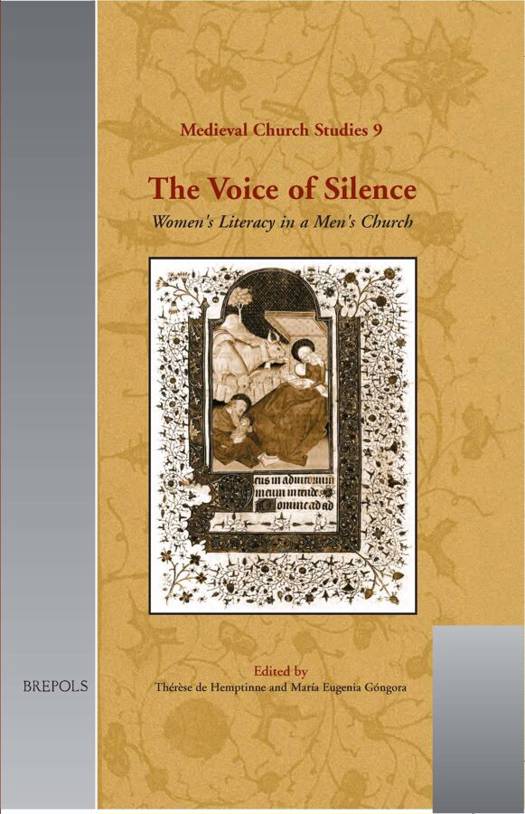
This book aims to collect and present the results of research done within the context of the project 'The voice of silence / La voz del silencio: An interdisciplinary research project about literate women and women authors in the West-European late Middle Ages (11th to 15th centuries) from a gender perspective'. The project was a bilateral research project, with participants of the University of Santiago de Chile on the one hand and Universiteit Gent on the other. Medieval scholars, literary historians, cultural historians and literary theorists joined forces. The angle from which the material was being studied, however, was always the same: gender being the central issue. The project focused on women as participants in late medieval society and culture. Indeed, all the researchers involved acquired their expertise in the field of 'medieval society and culture' and/or the field of women's literacy. Several members of this Flemish-Chilean project have contributed an essay to the proposed book, but supplemented by guest contributions. The guests are internationally renowned scholars reflecting an expertise in gender studies or in an aspect not covered by the team members of the project. Thus, the book contains essays by Anglo-American medieval scholars and researchers specialised in Dutch medieval mysticism. Their contributions complete the research results of the project, especially within the art of criticism. The story told in this book is focused on literate women and gender. In the course of the twelfth and thirteenth centuries, the voices of women authors, many of them religious and mystics, resounded again in a literate society dominated by clerics. Two of the most famous representatives of this 'female voice' are highlighted in Part I. These women were the forerunners of a new reading culture among (semi-)religious and even lay women in which the use of the vernacular was a decisive factor (Part II). Yet, from the thirteenth century onwards, and with increasing intensity towards the end of the Middle Ages, men once more tried to get a grip on (religious) women's reading and writing. Aspects of these attemps are illustrated in part III.
Spécifications
Parties prenantes
- Auteur(s) :
- Editeur:
Contenu
- Nombre de pages :
- 238
- Langue:
- Anglais
- Collection :
- Tome:
- n° 9
Caractéristiques
- EAN:
- 9782503514888
- Date de parution :
- 23-03-04
- Format:
- Livre relié
- Format numérique:
- Genaaid
- Dimensions :
- 165 mm x 245 mm
- Poids :
- 580 g


Seulement chez Librairie Club
+ 84 points sur votre carte client de Librairie Club
Cadeau


Les avis
Nous publions uniquement les avis qui respectent les conditions requises. Consultez nos conditions pour les avis.