

- Retrait en 2 heures
- Assortiment impressionnant
- Paiement sécurisé
- Toujours un magasin près de chez vous
- Retrait en 2 heures
- Assortiment impressionnant
- Paiement sécurisé
- Toujours un magasin près de chez vous



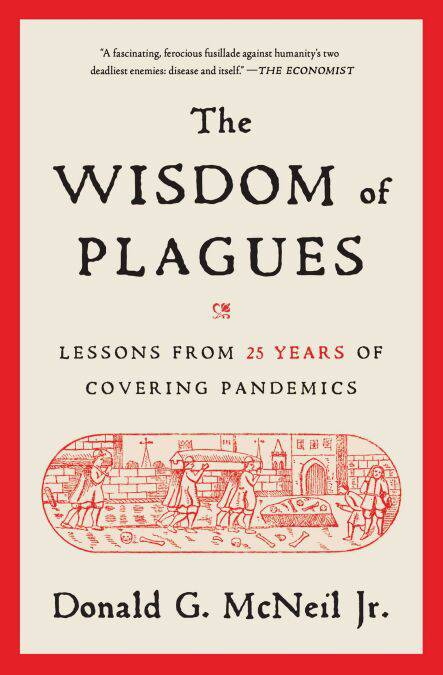
The Wisdom of Plagues EBOOK
Lessons from 25 Years of Covering Pandemics
Donald G. McNeil
Ebook | Anglais
15,65 €
+ 15 points
Format
Passer une commande en un clic
Payer en toute sécurité


Livré immédiatement par e-mail
Description
Award-winning New York Times reporter Donald G. McNeil, Jr. reflects on twenty-five years of covering pandemics—how governments react to them, how the media covers them, how they are exploited, and what we can do to prepare for the next one—in this “fascinating, ferocious fusillade against humanity’s two deadliest enemies: disease and itself” (The Economist).
For millions of Americans, Donald G. McNeil, Jr. was a comforting voice when the COVID-19 pandemic broke out. He was a regular reporter on The New York Times’s popular podcast The Daily and told listeners early on to prepare for the worst. He’d covered public health for twenty-five years and quickly realized that an obscure virus in Wuhan, China, was destined to grow into a global pandemic rivaling the 1918 Spanish flu. Because of his clear advice, a generation of Times readers knew the risk was real but that they might be spared by taking the right precautions. Because of his prescient work, The New York Times won the 2021 Pulitzer Gold Medal for Public Service.
The Wisdom of Plagues is “must-reading for preparing us better for the next unavoidable epidemic” (Peter Piot, MD, co-discoverer of Ebola) as McNeil shares his account of what he learned over a quarter-century of reporting in over sixty counties. Many science reporters understand the basics of diseases—from how a virus works to what goes into making a vaccine. But very few understand the psychology of how small outbreaks turn into pandemics, why people refuse to believe they’re at risk, or why they reject protective measures like quarantine or vaccines. The COVID-19 pandemic was the story McNeil had trained his whole life to cover. His expertise and breadth of sources let him make many accurate predictions in 2020 about the course that a deadly new virus would take and how different countries would respond.
By the time McNeil wrote his last New York Times stories, he had not lost his compassion—but he had grown far more stone-hearted about how governments should react. He had witnessed enough disasters and read enough history to realize that while every epidemic is different, failure was the one constant. Small case-clusters ballooned into catastrophe because weak leaders became mired in denial. Citizens refused to make even minor sacrifices for the common good. They were encouraged in that by money-hungry entrepreneurs and power-hungry populists. Science was ignored, obvious truths were denied, and the innocent too often died. In The Wisdom of Plagues, “one of the most enlightening books on public health” (Lena Wen, MD), McNeil offers tough, prescriptive advice on what we can do to improve global health and be better prepared for the inevitable next pandemic.
For millions of Americans, Donald G. McNeil, Jr. was a comforting voice when the COVID-19 pandemic broke out. He was a regular reporter on The New York Times’s popular podcast The Daily and told listeners early on to prepare for the worst. He’d covered public health for twenty-five years and quickly realized that an obscure virus in Wuhan, China, was destined to grow into a global pandemic rivaling the 1918 Spanish flu. Because of his clear advice, a generation of Times readers knew the risk was real but that they might be spared by taking the right precautions. Because of his prescient work, The New York Times won the 2021 Pulitzer Gold Medal for Public Service.
The Wisdom of Plagues is “must-reading for preparing us better for the next unavoidable epidemic” (Peter Piot, MD, co-discoverer of Ebola) as McNeil shares his account of what he learned over a quarter-century of reporting in over sixty counties. Many science reporters understand the basics of diseases—from how a virus works to what goes into making a vaccine. But very few understand the psychology of how small outbreaks turn into pandemics, why people refuse to believe they’re at risk, or why they reject protective measures like quarantine or vaccines. The COVID-19 pandemic was the story McNeil had trained his whole life to cover. His expertise and breadth of sources let him make many accurate predictions in 2020 about the course that a deadly new virus would take and how different countries would respond.
By the time McNeil wrote his last New York Times stories, he had not lost his compassion—but he had grown far more stone-hearted about how governments should react. He had witnessed enough disasters and read enough history to realize that while every epidemic is different, failure was the one constant. Small case-clusters ballooned into catastrophe because weak leaders became mired in denial. Citizens refused to make even minor sacrifices for the common good. They were encouraged in that by money-hungry entrepreneurs and power-hungry populists. Science was ignored, obvious truths were denied, and the innocent too often died. In The Wisdom of Plagues, “one of the most enlightening books on public health” (Lena Wen, MD), McNeil offers tough, prescriptive advice on what we can do to improve global health and be better prepared for the inevitable next pandemic.
Spécifications
Parties prenantes
- Auteur(s) :
- Editeur:
Contenu
- Nombre de pages :
- 384
- Langue:
- Anglais
Caractéristiques
- EAN:
- 9781668001417
- Date de parution :
- 08-01-24
- Format:
- Ebook
- Protection digitale:
- Adobe DRM
- Format numérique:
- ePub


Seulement chez Librairie Club
+ 15 points sur votre carte client de Librairie Club
Cadeau

Cadeau


Les avis
Nous publions uniquement les avis qui respectent les conditions requises. Consultez nos conditions pour les avis.