


- Retrait en 2 heures
- Assortiment impressionnant
- Paiement sécurisé
- Toujours un magasin près de chez vous
- Retrait en 2 heures
- Assortiment impressionnant
- Paiement sécurisé
- Toujours un magasin près de chez vous



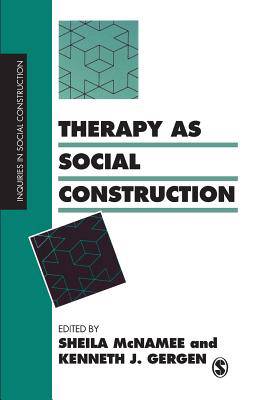
Therapy as Social Construction
77,45 €
+ 154 points
Description
"Clearing away the smoke of social construction from the sometimes-confusing mirrors of postmodernism is this rich volume that clarifies theory and offers therapeutic applications. Therapy as Social Construction examines a richer voice of empowerment within and beyond a therapeutic context. . . . Despite its title, this volume will pique the interest of communication educators too because what is said of therapy of social construction is true of a student-teacher contract. . . . It points the way for teachers willing to take a sometimes unpredictable, challenging, but never disempowering risk to apply to the same kind of thinking to their classroom." --Richard P. Long, Columbus College, Georgia This volume explores the new possibilities for the therapeutic process of adopting a social constructionist perspective. The starting point for all the contributors is a concern with socially constructed "texts." On one hand, our senses of self, identity, and life purpose are fundamentally, socially and culturally embedded. On the other, no single cultural script is all powerful. In social constructionist therapy, a key process is the co-creation by therapists and clients of new, more satisfactory "stories," in ways which nevertheless recognize their social, relational character. The first part of the book looks at the theoretical basis for social constructionist therapy, including the implications for client-therapist relationships. Authors then explore various approaches in practice, including "irreverent therapy," "the not-knowing therapist," the creative significance of difference, and the role of reflexivity. A number of case studies are presented. The final section presents an exhilarating mix of overview, self-critique, and an agenda for the future. Therapy as Social Construction will be essential reading for therapists, counselors, clinnical psychologists and all those in the helping professions providing therapeutic services to their clients. "These readings about the application of social constructionism to psychotherapy are unique because the authors reside in a number of different countries and come from a wide range of professional backgrounds. Despite its small size, the book covers a breadth of topics. . .. The chapters focus on an evaluation, overview, and critique of a constructionist approach toward psychotherapy. For scholars and practitioners interested in psychotherapy, the social sciences, and the philosophy of science. Graduate through professional." --C. L.Kleinke, University of Alaska, Anchorage
Spécifications
Parties prenantes
- Editeur:
Contenu
- Nombre de pages :
- 240
- Langue:
- Anglais
- Collection :
Caractéristiques
- EAN:
- 9780803983038
- Date de parution :
- 10-12-92
- Format:
- Livre broché
- Format numérique:
- Trade paperback (VS)
- Dimensions :
- 145 mm x 219 mm
- Poids :
- 294 g

Seulement chez Librairie Club
+ 154 points sur votre carte client de Librairie Club
Cadeau


Les avis
Nous publions uniquement les avis qui respectent les conditions requises. Consultez nos conditions pour les avis.