


- Retrait en 2 heures
- Assortiment impressionnant
- Paiement sécurisé
- Toujours un magasin près de chez vous
- Retrait gratuit dans votre magasin Club
- 7.000.0000 titres dans notre catalogue
- Payer en toute sécurité
- Toujours un magasin près de chez vous


Description
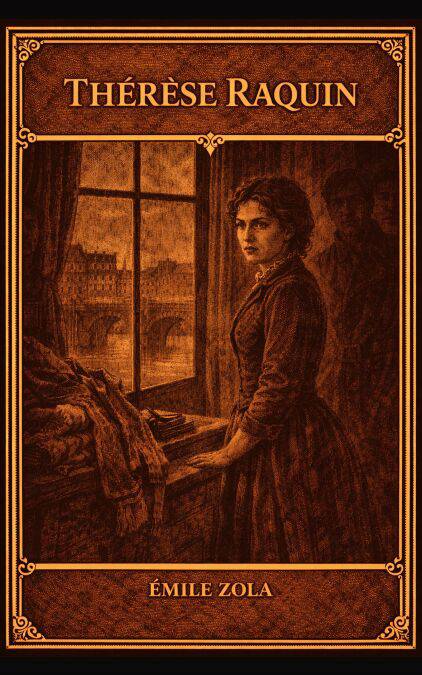
Thérèse Raquin by Émile Zola is a dark and gripping novel that explores passion, guilt, and the psychological consequences of crime. First published in 1867, this groundbreaking work established Zola as a leading voice of literary naturalism, presenting a raw and unflinching portrayal of human desire and moral decay.
Set in the shadowy streets and cramped quarters of Paris, the story follows Thérèse, a young woman raised in emotional repression and trapped in a loveless marriage to her sickly cousin, Camille. Living under the watchful eye of her domineering aunt, Madame Raquin, Thérèse's life is marked by monotony and suffocation. Her quiet desperation intensifies when she meets Laurent, a friend of her husband whose physical vitality and boldness awaken in her a long-suppressed hunger for passion.
Their illicit affair soon transforms into a dangerous conspiracy. Believing Camille to be the obstacle to their freedom, Thérèse and Laurent commit a shocking act that binds them together in secrecy and fear. Yet rather than liberating them, their crime becomes the source of relentless psychological torment. Haunted by guilt and suspicion, their once-fiery desire deteriorates into mutual resentment and paranoia.
Zola's powerful narrative delves deeply into the inner workings of his characters' minds. He portrays them not as romanticized villains, but as individuals driven by instinct, environment, and circumstance. Through his meticulous descriptions and stark realism, Zola examines how passion can turn destructive and how guilt can corrode the soul.
At its core, Thérèse Raquin is a study of human nature stripped of illusion. The novel challenges readers to confront uncomfortable truths about desire, responsibility, and the consequences of unchecked emotion. Zola's vivid depiction of the Parisian setting—its dim shops, narrow passages, and oppressive interiors—intensifies the atmosphere of claustrophobia and dread.
Both scandalous and revolutionary in its time, Thérèse Raquin remains a cornerstone of naturalist literature. Its exploration of crime and psychological punishment anticipates later works of modern realism, influencing generations of writers.
Haunting, intense, and uncompromising, Thérèse Raquin is a timeless tale of passion and ruin—a chilling reminder that actions born of desire can carry consequences far more devastating than imagined.
Set in the shadowy streets and cramped quarters of Paris, the story follows Thérèse, a young woman raised in emotional repression and trapped in a loveless marriage to her sickly cousin, Camille. Living under the watchful eye of her domineering aunt, Madame Raquin, Thérèse's life is marked by monotony and suffocation. Her quiet desperation intensifies when she meets Laurent, a friend of her husband whose physical vitality and boldness awaken in her a long-suppressed hunger for passion.
Their illicit affair soon transforms into a dangerous conspiracy. Believing Camille to be the obstacle to their freedom, Thérèse and Laurent commit a shocking act that binds them together in secrecy and fear. Yet rather than liberating them, their crime becomes the source of relentless psychological torment. Haunted by guilt and suspicion, their once-fiery desire deteriorates into mutual resentment and paranoia.
Zola's powerful narrative delves deeply into the inner workings of his characters' minds. He portrays them not as romanticized villains, but as individuals driven by instinct, environment, and circumstance. Through his meticulous descriptions and stark realism, Zola examines how passion can turn destructive and how guilt can corrode the soul.
At its core, Thérèse Raquin is a study of human nature stripped of illusion. The novel challenges readers to confront uncomfortable truths about desire, responsibility, and the consequences of unchecked emotion. Zola's vivid depiction of the Parisian setting—its dim shops, narrow passages, and oppressive interiors—intensifies the atmosphere of claustrophobia and dread.
Both scandalous and revolutionary in its time, Thérèse Raquin remains a cornerstone of naturalist literature. Its exploration of crime and psychological punishment anticipates later works of modern realism, influencing generations of writers.
Haunting, intense, and uncompromising, Thérèse Raquin is a timeless tale of passion and ruin—a chilling reminder that actions born of desire can carry consequences far more devastating than imagined.
Spécifications
Parties prenantes
- Auteur(s) :
- Editeur:
Contenu
- Nombre de pages :
- 248
- Langue:
- Anglais
Caractéristiques
- EAN:
- 9786947221142
- Date de parution :
- 17-02-26
- Format:
- Ebook
- Protection digitale:
- Digital watermarking
- Format numérique:
- ePub


Seulement chez Librairie Club
Cadeau

Cadeau


Les avis
Nous publions uniquement les avis qui respectent les conditions requises. Consultez nos conditions pour les avis.