


- Retrait en 2 heures
- Assortiment impressionnant
- Paiement sécurisé
- Toujours un magasin près de chez vous
- Retrait en 2 heures
- Assortiment impressionnant
- Paiement sécurisé
- Toujours un magasin près de chez vous



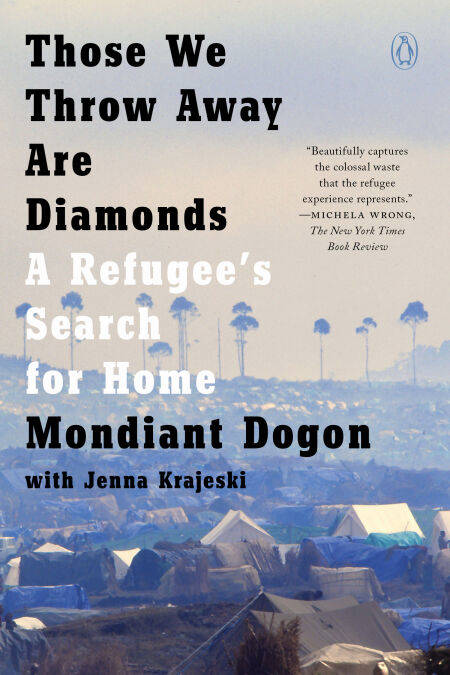
Those We Throw Away Are Diamonds EBOOK
A Refugee's Search for Home
Mondiant Dogon, Jenna Krajeski
Ebook | Anglais
5,77 €
+ 5 points
Format
Description
A New York Times Book Review Editors' Choice • Named a Best Nonfiction Book of 2021 by Kirkus • A New York Times Book Review Paperback Row Selection • Shortlisted for the Moore Prize for Human Rights Writing
A stunning and heartbreaking lens on the global refugee crisis, from a man who faced the very worst of humanity and survived to advocate for displaced people around the world
One day when Mondiant Dogon, a Bagogwe Tutsi born in the Democratic Republic of Congo, was only three years old, his father’s lifelong friend, a Hutu man, came to their home with a machete in his hand and warned the family they were to be killed within hours. Dogon’s family fled into the forest, initiating a long and dangerous journey into Rwanda. They made their way to the first of several UN tent cities in which they would spend decades. But their search for a safe haven had just begun.
Hideous violence stalked them in the camps. Even though Rwanda famously has a former refugee for a president in Paul Kagame, refugees in that country face enormous prejudice and acute want. For much of his life, Dogon and his family ate barely enough to keep themselves from starving. He fled back to Congo in search of the better life that had been lost, but there he was imprisoned and left without any option but to become a child soldier.
For most refugees, the camp starts as an oasis but soon becomes quicksand, impossible to leave. Yet Dogon managed to be one of the few refugees he knew to go to college. Though he hid his status from his fellow students out of shame, eventually he would emerge as an advocate for his people.
Rarely do refugees get to tell their own stories. We see them only for a moment, if at all, in flight: Syrians winding through the desert; children searching a Greek shore for their parents; families gathered at the southern border of the United States. But through his writing, Dogon took control of his own narrative and spoke up for forever refugees everywhere.
As Dogon once wrote in a poem, “Those we throw away are diamonds.”
A stunning and heartbreaking lens on the global refugee crisis, from a man who faced the very worst of humanity and survived to advocate for displaced people around the world
One day when Mondiant Dogon, a Bagogwe Tutsi born in the Democratic Republic of Congo, was only three years old, his father’s lifelong friend, a Hutu man, came to their home with a machete in his hand and warned the family they were to be killed within hours. Dogon’s family fled into the forest, initiating a long and dangerous journey into Rwanda. They made their way to the first of several UN tent cities in which they would spend decades. But their search for a safe haven had just begun.
Hideous violence stalked them in the camps. Even though Rwanda famously has a former refugee for a president in Paul Kagame, refugees in that country face enormous prejudice and acute want. For much of his life, Dogon and his family ate barely enough to keep themselves from starving. He fled back to Congo in search of the better life that had been lost, but there he was imprisoned and left without any option but to become a child soldier.
For most refugees, the camp starts as an oasis but soon becomes quicksand, impossible to leave. Yet Dogon managed to be one of the few refugees he knew to go to college. Though he hid his status from his fellow students out of shame, eventually he would emerge as an advocate for his people.
Rarely do refugees get to tell their own stories. We see them only for a moment, if at all, in flight: Syrians winding through the desert; children searching a Greek shore for their parents; families gathered at the southern border of the United States. But through his writing, Dogon took control of his own narrative and spoke up for forever refugees everywhere.
As Dogon once wrote in a poem, “Those we throw away are diamonds.”
Spécifications
Parties prenantes
- Auteur(s) :
- Editeur:
Contenu
- Nombre de pages :
- 336
- Langue:
- Anglais
Caractéristiques
- EAN:
- 9781984881298
- Date de parution :
- 11-10-2021
- Format:
- Ebook
- Protection digitale:
- Adobe DRM
- Format numérique:
- ePub


Seulement chez Librairie Club
+ 5 points sur votre carte client de Librairie Club
Cadeau


Les avis
Nous publions uniquement les avis qui respectent les conditions requises. Consultez nos conditions pour les avis.