


- Retrait en 2 heures
- Assortiment impressionnant
- Paiement sécurisé
- Toujours un magasin près de chez vous
- Retrait en 2 heures
- Assortiment impressionnant
- Paiement sécurisé
- Toujours un magasin près de chez vous



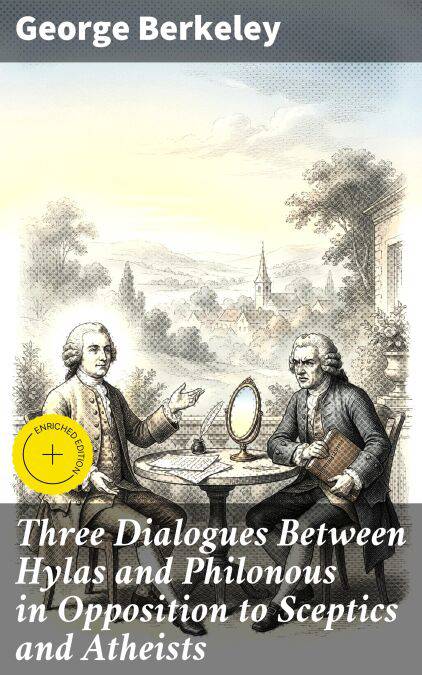
Three Dialogues Between Hylas and Philonous in Opposition to Sceptics and Atheists EBOOK
Enriched edition. Challenging Skepticism and Atheism Through Dialogues
George Berkeley
Ebook | Anglais
0,49 €
0,99 €
Format
Description
In "Three Dialogues Between Hylas and Philonous in Opposition to Sceptics and Atheists," George Berkeley presents a profound examination of epistemology and metaphysics through a captivating dialectic format. The dialogues engage two characters, Hylas, who represents materialism, and Philonous, the protagonist advocating for idealism. Berkeley'Äôs literary style is marked by clarity and philosophical rigor, employing persuasive arguments to refute sceptical and atheistic positions of his time. Set against the backdrop of the early 18th century'Äôs Enlightenment, this work serves as both a defense of religious belief and a profound inquiry into the nature of reality, emphasizing the primacy of perception in the formation of knowledge. George Berkeley, an Irish philosopher, is renowned for his role in developing philosophical idealism, a theory that posits that reality is fundamentally immaterial. His experiences as a theologian and his subsequent discontent with materialist philosophies spurred him to craft this text. Influenced by the prevailing scepticism of the period, his dialogues reflect a deep-seated commitment to reconciling faith with reason, illustrating his belief that to exist is to be perceived, thus offering a robust alternative to the dominant materialist narratives. "Three Dialogues" is essential reading for anyone interested in the intersections of philosophy, theology, and literature. Berkeley'Äôs thought-provoking exchanges not only challenge the reader's assumptions about existence but also invite a deeper contemplation of the interconnectedness of perception, reality, and belief. Whether you are a seasoned scholar or a curious newcomer to philosophical discourse, this work promises to engage and enlighten.
In this enriched edition, we have carefully created added value for your reading experience:
- A succinct Introduction situates the work's timeless appeal and themes.
- The Synopsis outlines the central plot, highlighting key developments without spoiling critical twists.
- A detailed Historical Context immerses you in the era's events and influences that shaped the writing.
- An Author Biography reveals milestones in the author's life, illuminating the personal insights behind the text.
- A thorough Analysis dissects symbols, motifs, and character arcs to unearth underlying meanings.
- Reflection questions prompt you to engage personally with the work's messages, connecting them to modern life.
- Hand‐picked Memorable Quotes shine a spotlight on moments of literary brilliance.
- Interactive footnotes clarify unusual references, historical allusions, and archaic phrases for an effortless, more informed read.
In this enriched edition, we have carefully created added value for your reading experience:
- A succinct Introduction situates the work's timeless appeal and themes.
- The Synopsis outlines the central plot, highlighting key developments without spoiling critical twists.
- A detailed Historical Context immerses you in the era's events and influences that shaped the writing.
- An Author Biography reveals milestones in the author's life, illuminating the personal insights behind the text.
- A thorough Analysis dissects symbols, motifs, and character arcs to unearth underlying meanings.
- Reflection questions prompt you to engage personally with the work's messages, connecting them to modern life.
- Hand‐picked Memorable Quotes shine a spotlight on moments of literary brilliance.
- Interactive footnotes clarify unusual references, historical allusions, and archaic phrases for an effortless, more informed read.
Spécifications
Parties prenantes
- Auteur(s) :
- Editeur:
Contenu
- Nombre de pages :
- 163
- Langue:
- Anglais
Caractéristiques
- EAN:
- 4057664154101
- Date de parution :
- 18-11-19
- Format:
- Ebook
- Protection digitale:
- Digital watermarking
- Format numérique:
- ePub


Seulement chez Librairie Club
Cadeau


Les avis
Nous publions uniquement les avis qui respectent les conditions requises. Consultez nos conditions pour les avis.