


- Retrait en 2 heures
- Assortiment impressionnant
- Paiement sécurisé
- Toujours un magasin près de chez vous
- Retrait en 2 heures
- Assortiment impressionnant
- Paiement sécurisé
- Toujours un magasin près de chez vous



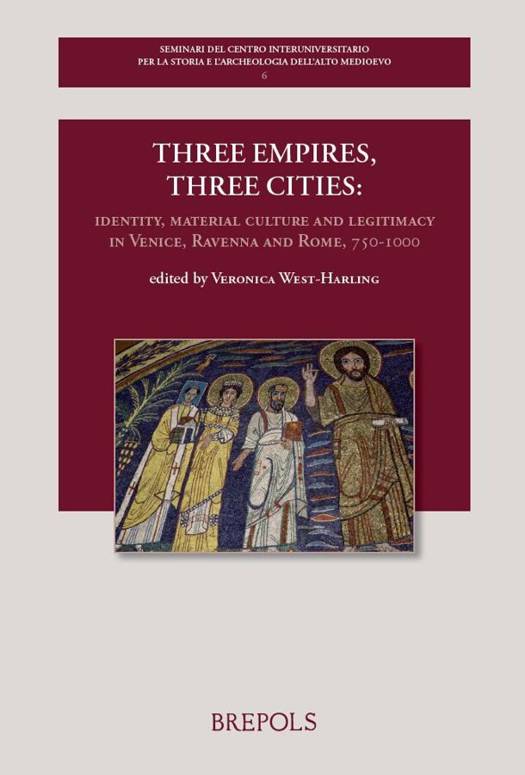
Three Empires, Three Cities
Identity, Material Culture and Legitimacy in Venice, Ravenna and Rome, 750-1000: Volume Offered to Chris Wickham as a Gift for His 65th Birthday
Veronica West-Harling
95,40 €
+ 190 points
Description
This volume presents most of the papers given at a workshop held in Oxford at All Souls College in 2014, part of a research project which focuses on Northern and Central Byzantine and post-Byzantine Italy between 750 and 1000, and proposes a comparison between the development of three cities: Venice, Ravenna and Rome. These three cities share a common feature, which is to find themselves outside the framework of Longobard-Frankish power and society. A comparison between them allows us to glimpse the political, social and cultural development of areas in which the points of reference inherited from the past remain always more 'Roman' than 'Longobard' or 'Frankish'. These three cities have geopolitical characteristics which make them very different from each other: one is effectively independent from Frankish and Ottonian power (Venice), a second is formally independent but nevertheless much involved with Frankish politics (Rome), and the third becomes increasingly an integral part of the imperial system (Ravenna). The social and cultural analysis proposed here therefore includes political and ideological practice as well as self-representation through material culture. It aims to discuss the convergences and the divergences between the political realities and the political rhetoric, images and ideology, of early medieval Italy's empires, and to highlight the ways in which these have contributed to creating the cultures and societies of these three cities. Ultimately, its aim is to illuminate the factors which created the political, social, cultural, religious, artistic and material identity of early medieval Rome, Ravenna and Venice, based on their perception of both their past and their contemporary environments.
Spécifications
Parties prenantes
- Auteur(s) :
- Editeur:
Contenu
- Nombre de pages :
- 351
- Langue:
- Anglais
- Collection :
- Tome:
- n° 6
Caractéristiques
- EAN:
- 9782503562285
- Date de parution :
- 02-09-15
- Format:
- Livre broché
- Format numérique:
- Trade paperback (VS)
- Dimensions :
- 155 mm x 234 mm
- Poids :
- 612 g


Seulement chez Librairie Club
+ 190 points sur votre carte client de Librairie Club
Cadeau


Les avis
Nous publions uniquement les avis qui respectent les conditions requises. Consultez nos conditions pour les avis.