


- Retrait en 2 heures
- Assortiment impressionnant
- Paiement sécurisé
- Toujours un magasin près de chez vous
- Retrait en 2 heures
- Assortiment impressionnant
- Paiement sécurisé
- Toujours un magasin près de chez vous



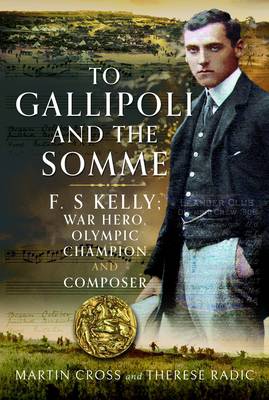
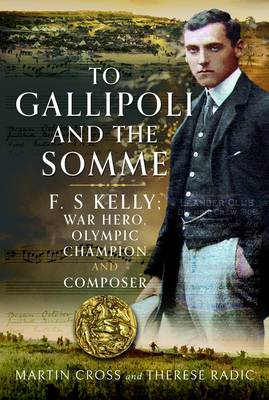
To Gallipoli and the Somme
F. S Kelly; War Hero, Olympic Champion and Pianist Composer
Martin Cross, Therese Radic
Livre relié | Anglais
34,95 €
+ 69 points
Description
It was a performance unique in the history of music. In mid-September 1916 soldiers of a battalion brass band walked into position just a 100 yards in front of a 4.5-inch British howitzer battery. They adjusted their music, raised their instruments and at the downbeat of their conductor, launched into the 1812 Overture with the heavy artillery supplying the cannon fire of the famous finale while firing like hell at the enemy. The band belonged to the Hood Battalion. The defiant conductor - Frederick Septimus Kelly - is the subject of this, his first full biography.'
Kelly was born in Sydney but educated at Eton and Oxford. Though he was already well known as a pianist and composer in London circles it was in 1911, when he turned thirty, that he made his public debut as a pianist in Sydney, returning to London to turn professional a year later. Kelly inherited wealth; his father was a mining magnate. He knew all the right people and had access to power and influence. He was the life and soul of any house party, witty, engaging and invited everywhere.
His diaries record a privileged life led against the background of Edwardian high society and high athletic achievement. As an oarsman he had won the Diamond Sculls, effectively the championship of the world, three times. He was part of the famous 'old crocs' eight that took an unlikely Olympic gold for Britain in 1908. As an officer in the Royal Navy Volunteer Regiment, he was awarded the Distinguished Service Cross for 'conspicuous gallantry' during the evacuation of the Peninsula in January 1915.
Kelly was thirty-five when he was killed in action at Beaucourt sur Ancre, France on 13 November 1916 while leading his company in an all-out attack on German lines. He had already made his mark, establishing a reputation as a London pianist, composer and patron of music. Authors Therese Radic and Martin Cross make sense of Kelly's incredible life.
Kelly was born in Sydney but educated at Eton and Oxford. Though he was already well known as a pianist and composer in London circles it was in 1911, when he turned thirty, that he made his public debut as a pianist in Sydney, returning to London to turn professional a year later. Kelly inherited wealth; his father was a mining magnate. He knew all the right people and had access to power and influence. He was the life and soul of any house party, witty, engaging and invited everywhere.
His diaries record a privileged life led against the background of Edwardian high society and high athletic achievement. As an oarsman he had won the Diamond Sculls, effectively the championship of the world, three times. He was part of the famous 'old crocs' eight that took an unlikely Olympic gold for Britain in 1908. As an officer in the Royal Navy Volunteer Regiment, he was awarded the Distinguished Service Cross for 'conspicuous gallantry' during the evacuation of the Peninsula in January 1915.
Kelly was thirty-five when he was killed in action at Beaucourt sur Ancre, France on 13 November 1916 while leading his company in an all-out attack on German lines. He had already made his mark, establishing a reputation as a London pianist, composer and patron of music. Authors Therese Radic and Martin Cross make sense of Kelly's incredible life.
Spécifications
Parties prenantes
- Auteur(s) :
- Editeur:
Contenu
- Nombre de pages :
- 248
- Langue:
- Anglais
Caractéristiques
- EAN:
- 9781036190354
- Date de parution :
- 30-11-26
- Format:
- Livre relié
- Format numérique:
- Genaaid
- Dimensions :
- 159 mm x 235 mm


Seulement chez Librairie Club
+ 69 points sur votre carte client de Librairie Club
Cadeau


Les avis
Nous publions uniquement les avis qui respectent les conditions requises. Consultez nos conditions pour les avis.