


- Retrait en 2 heures
- Assortiment impressionnant
- Paiement sécurisé
- Toujours un magasin près de chez vous
- Retrait en 2 heures
- Assortiment impressionnant
- Paiement sécurisé
- Toujours un magasin près de chez vous



38,95 €
+ 77 points
Format
Description
The unknown history of economic conservatism in India after independence
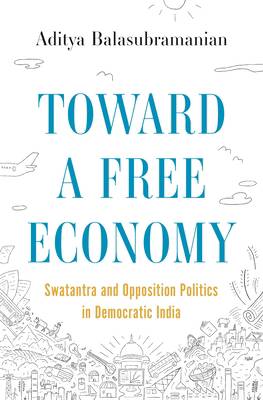
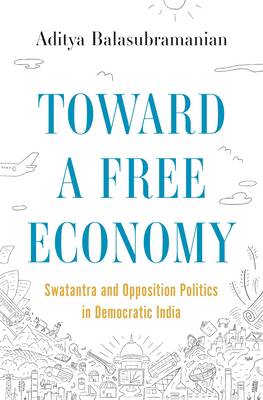
Neoliberalism is routinely characterized as an antidemocratic, expert-driven project aimed at insulating markets from politics, devised in the North Atlantic and projected on the rest of the world. Revising this understanding, Toward a Free Economy shows how economic conservatism emerged and was disseminated in a postcolonial society consistent with the logic of democracy. Twelve years after the British left India, a Swatantra ("Freedom") Party came to life. It encouraged Indians to break with the Indian National Congress Party, which spearheaded the anticolonial nationalist movement and now dominated Indian democracy. Rejecting Congress's heavy-industrial developmental state and the accompanying rhetoric of socialism, Swatantra promised "free economy" through its project of opposition politics. As it circulated across various genres, "free economy" took on meanings that varied by region and language, caste and class, and won diverse advocates. These articulations, informed by but distinct from neoliberalism, came chiefly from communities in southern and western India as they embraced new forms of entrepreneurial activity. At their core, they connoted anticommunism, unfettered private economic activity, decentralized development, and the defense of private property. Opposition politics encompassed ideas and practice. Swatantra's leaders imagined a conservative alternative to a progressive dominant party in a two-party system. They communicated ideas and mobilized people around such issues as inflation, taxation, and property. And they made creative use of India's institutions to bring checks and balances to the political system. Democracy's persistence in India is uncommon among postcolonial societies. By excavating a perspective of how Indians made and understood their own democracy and economy, Aditya Balasubramanian broadens our picture of neoliberalism, democracy, and the postcolonial world.Spécifications
Parties prenantes
- Auteur(s) :
- Editeur:
Contenu
- Nombre de pages :
- 352
- Langue:
- Anglais
- Collection :
Caractéristiques
- EAN:
- 9780691249285
- Date de parution :
- 25-08-26
- Format:
- Livre broché
- Format numérique:
- Trade paperback (VS)
- Dimensions :
- 155 mm x 235 mm


Seulement chez Librairie Club
+ 77 points sur votre carte client de Librairie Club
Cadeau


Les avis
Nous publions uniquement les avis qui respectent les conditions requises. Consultez nos conditions pour les avis.