


- Retrait en 2 heures
- Assortiment impressionnant
- Paiement sécurisé
- Toujours un magasin près de chez vous
- Retrait en 2 heures
- Assortiment impressionnant
- Paiement sécurisé
- Toujours un magasin près de chez vous



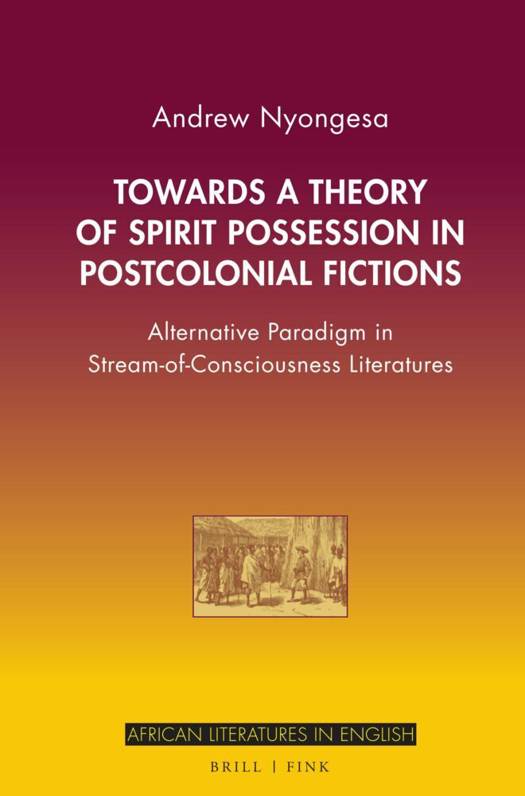
Towards a Theory of Spirit Possession in Postcolonial Fictions
Alternative Paradigm in Stream-Of-Consciousness Literatures
Andrew Nyongesa
122,45 €
+ 244 points
Description
This study delineates the spirit possession trope as an alternative canon in the analyses of stream-of-consciousness literatures. The study interrogates the influence of spirit possession paradigm in contemporary works of fi ction and folklore in Africanised religious societies from videos on social media (YouTube). The rapid development of these literatures in Africa has delimited their readings to Western models such as dissociation that may not offer satisfactory interpretation because of their inherent differences. While some existing studies in the area propose use of the two tropes in interpretation of literary works, such an approach ignores the fundamental differences between the two paradigms. This study was carried out on African novels and folklore from selected Africanised Christian societies to discriminate spirit possession as a trope apt for a theoretical model for analysis of stream-of-consciousness literatures in Africa and beyond. Seven novels by African writers (both pioneer and contemporary) and two Christian societies were purposively sampled. In spite of most of the sampled texts and societies exhibiting aspects typical of stream of consciousness literatures, the following were more fervent about the subjects: Nuruddin Farah's Close Sesame, Brian Chikwava's Harare North, Buchi Emecheta's The Joys of Motherhood, Chinua Achebe's Things Fall Apart, Elechi Amadi's The Concubine and Hisham Matar's The Return. The two Africanised churches were Kenyan based Jesus Teaching Ministry and Newlife Prayer Centre and Church. The study adopted the descriptive and narrative analysis qualitative designs. Data from secondary sources enabled the theoretical comprehension and qualitative analysis of primary texts. The study proceeded through content analyses of videos and close textual reading of the primary and secondary texts while Mbiti and Cohen's tenets of spirit possession served as theoretical bases for interpretation. It was found that rather than adopt Western models that present dissociation or presence of the other as predominantly pathological, an African paradigm demonstrates both its merits and demerits for objectivity.
Spécifications
Parties prenantes
- Auteur(s) :
- Editeur:
Contenu
- Nombre de pages :
- 131
- Langue:
- Anglais
- Collection :
- Tome:
- n° 4
Caractéristiques
- EAN:
- 9783770569458
- Date de parution :
- 10-03-25
- Format:
- Livre relié
- Format numérique:
- Genaaid
- Dimensions :
- 155 mm x 235 mm
- Poids :
- 344 g


Seulement chez Librairie Club
+ 244 points sur votre carte client de Librairie Club
Cadeau


Les avis
Nous publions uniquement les avis qui respectent les conditions requises. Consultez nos conditions pour les avis.