


- Retrait en 2 heures
- Assortiment impressionnant
- Paiement sécurisé
- Toujours un magasin près de chez vous
- Retrait gratuit dans votre magasin Club
- 7.000.0000 titres dans notre catalogue
- Payer en toute sécurité
- Toujours un magasin près de chez vous



49,29 €
+ 49 points
Description
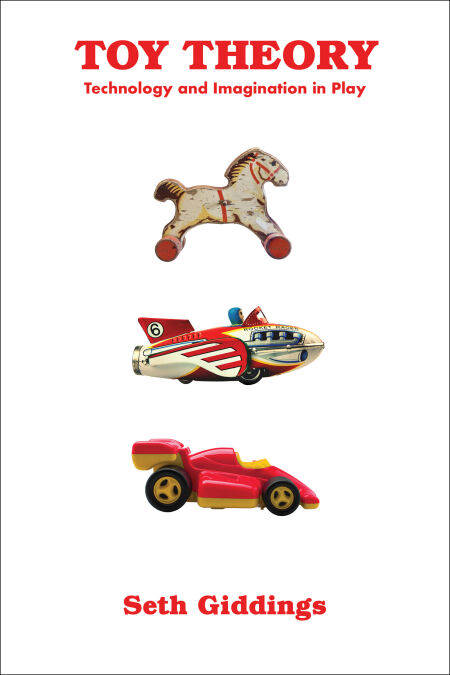
A novel interpretation of the history and theory of technology from the perspective of toys, play, and play objects.
Toy Theory addresses the relationships between toys and technology in two distinct but overlapping ways: first, as underexamined cultural artifacts and behaviors with significant technical attributes and, second, as playful and toylike dimensions of technology at large. Seth Giddings sets out a “toy theory” of technology that emphasizes the speculative, experimental, and noninstrumental in technological paradigms and argues that children’s playthings, rather than being the most ephemeral and inconsequential of technical devices, instead offer analytical and anthropological resources for understanding the materiality and imaginaries of technology over time.
After defining toy theory in general and conceptual terms, Giddings examines different types of toys to explore shifting relationships between the microcosmic symbolic or mimetic content, material and technical constitution, and modes of play of toys and toy-related artifacts, on the one hand, and prevailing, macrocosmic, technological paradigms and imaginaries, on the other. Taking a broad historical and genealogical view, Giddings traces contemporary postdigital toy and play culture to precedents from the neolithic through to the Enlightenment to consumer culture from the early nineteenth century to the present day.
Toy Theory addresses the relationships between toys and technology in two distinct but overlapping ways: first, as underexamined cultural artifacts and behaviors with significant technical attributes and, second, as playful and toylike dimensions of technology at large. Seth Giddings sets out a “toy theory” of technology that emphasizes the speculative, experimental, and noninstrumental in technological paradigms and argues that children’s playthings, rather than being the most ephemeral and inconsequential of technical devices, instead offer analytical and anthropological resources for understanding the materiality and imaginaries of technology over time.
After defining toy theory in general and conceptual terms, Giddings examines different types of toys to explore shifting relationships between the microcosmic symbolic or mimetic content, material and technical constitution, and modes of play of toys and toy-related artifacts, on the one hand, and prevailing, macrocosmic, technological paradigms and imaginaries, on the other. Taking a broad historical and genealogical view, Giddings traces contemporary postdigital toy and play culture to precedents from the neolithic through to the Enlightenment to consumer culture from the early nineteenth century to the present day.
Spécifications
Parties prenantes
- Auteur(s) :
- Editeur:
Contenu
- Nombre de pages :
- 286
- Langue:
- Anglais
Caractéristiques
- EAN:
- 9780262379007
- Date de parution :
- 04-11-24
- Format:
- Ebook
- Protection digitale:
- Adobe DRM
- Format numérique:
- ePub


Seulement chez Librairie Club
+ 49 points sur votre carte client de Librairie Club
Cadeau

Cadeau


Les avis
Nous publions uniquement les avis qui respectent les conditions requises. Consultez nos conditions pour les avis.