


- Retrait en 2 heures
- Assortiment impressionnant
- Paiement sécurisé
- Toujours un magasin près de chez vous
- Retrait en 2 heures
- Assortiment impressionnant
- Paiement sécurisé
- Toujours un magasin près de chez vous



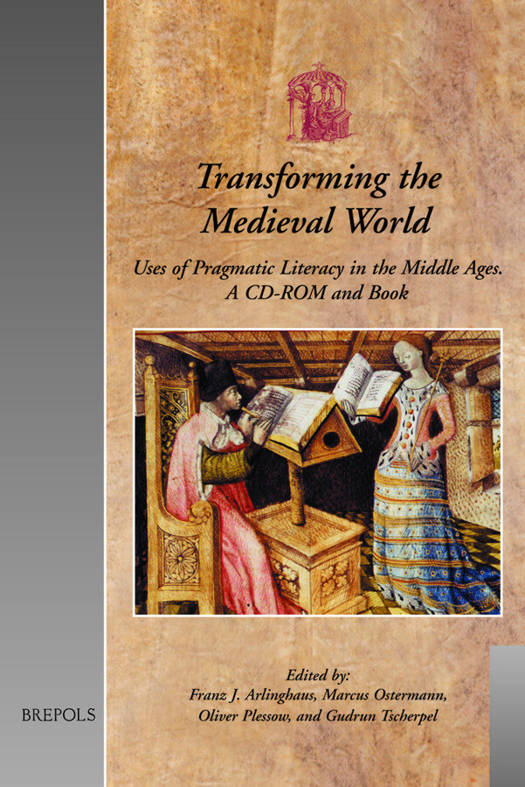
Transforming the Medieval World
Franz-J. Arlinghaus
53,00 €
+ 106 points
Description
When viewed retrospectively, the period between the eleventh and the fifteenth centuries was a phase of European history that was characterized by a radical and fundamental media transformation. Before this time, the vast majority of the population had never encountered the written word in their day-to-day activities. From the beginning of the second millennium, however, texts began to appear in, and influence, almost every sphere of human life. Medieval written texts were subject to revision, copying, embellishments, and deletions; they were read silently and aloud, and they were recited in a variety of contexts. This CD-ROM and book, Transforming the Medieval World, presents these changes dynamically by linking texts and images from this period, and by providing detailed commentaries on each of them. The multimedia environment offered on the CD visualizes these textual transformations and illustrates the adaptability and dynamism of writing and its reception. The uses of writing in this early phase of intensive European literacy are analysed in eleven separate multimedia presentations, which are almost all based on research carried out by the Special Research Unit (SFB) between 1986 and 1999. The CD also contains an anthology of important essays, which provide the user with further reading materials, as well as a general bibliography. The book which accompanies the CD-ROM facilitates the use of the CD itself, and provides the various multimedia presentations in written format. As such, Transforming the Medieval World will be invaluable to both scholars and students interested in medieval literacy.
Spécifications
Parties prenantes
- Auteur(s) :
- Editeur:
Contenu
- Nombre de pages :
- 312
- Langue:
- Français
- Collection :
- Tome:
- n° 6
Caractéristiques
- EAN:
- 9782503511665
- Date de parution :
- 16-11-06
- Format:
- Livre relié
- Poids :
- 706 g


Seulement chez Librairie Club
+ 106 points sur votre carte client de Librairie Club
Cadeau


Les avis
Nous publions uniquement les avis qui respectent les conditions requises. Consultez nos conditions pour les avis.