


En raison d'une grève chez bpost, des retards de livraison peuvent survenir. Besoin de quelque chose en urgence ? Optez pour un retrait en magasin ou rendez-vous dans une Librairie Club à proximité.
- Retrait en 2 heures
- Assortiment impressionnant
- Paiement sécurisé
- Toujours un magasin près de chez vous
En raison d'une grève chez bpost, des retards de livraison peuvent survenir. Besoin de quelque chose en urgence ? Optez pour un retrait en magasin ou rendez-vous dans une Librairie Club à proximité.
- Retrait en 2 heures
- Assortiment impressionnant
- Paiement sécurisé
- Toujours un magasin près de chez vous


48,45 €
+ 96 points
Format
Description
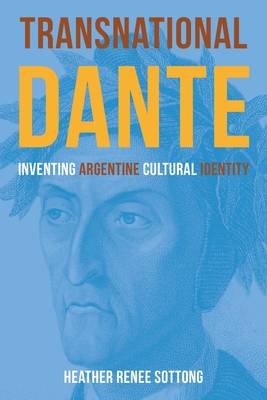
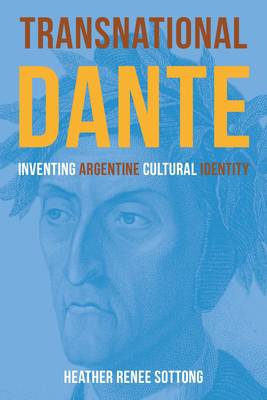
Opens the field of Dante Studies to further transnational studies of the Divine Comedy's circulation, translation, and global influence
This fascinating book examines how Dante was repurposed by Argentine politicians and authors who were concerned with the construction of Argentine national identity in the late nineteenth and early twentieth centuries. Sottong's work is informed by the theories of Eric Hobsbawm, Benedict Anderson, and Nicolas Shumway, who coined the concepts of "invented traditions," "imagined communities," and "guiding fictions," respectively. Sottong has applied these notions to the case of Argentina, which, after the War of Independence from Spain (1810-1818), had to develop its own national cultural identity. In this volume, she investigates Dante's transnational influence in Argentina: Why did Argentine authors consistently call upon Dante in their attempts to develop Argentine literature? What are the textual and thematic characteristics of Dante's Divine Comedy that make it an ideal vehicle for literary appropriation? What are the historical and cultural factors that account for Dante's enduring popularity in Italy and beyond? How did the strong presence of Italians in Argentina influence cultural production in the developing nation? And how are the re-writings of Dante in the Argentine canon in dialogue with one another? What Sottong found, remarkably, was that rewriting Dante was a way for Argentine authors to voice their views on the direction that should be taken to develop Argentine letters; Dante became something of a literary guide as Argentine intellectuals navigated the complex labyrinth of their national identity. The consistent rewriting of the Divine Comedy in the Argentine context testifies to the fact that great works of literature can be revived during different periods and even reappropriated by various peoples to foster mythologies of inclusion or exclusion related to national identity.Spécifications
Parties prenantes
- Auteur(s) :
- Editeur:
Contenu
- Nombre de pages :
- 256
- Langue:
- Anglais
- Collection :
Caractéristiques
- EAN:
- 9781531510442
- Date de parution :
- 01-04-25
- Format:
- Livre broché
- Format numérique:
- Trade paperback (VS)
- Dimensions :
- 152 mm x 229 mm
- Poids :
- 362 g


Seulement chez Librairie Club
+ 96 points sur votre carte client de Librairie Club
Cadeau


Les avis
Nous publions uniquement les avis qui respectent les conditions requises. Consultez nos conditions pour les avis.