


- Retrait en 2 heures
- Assortiment impressionnant
- Paiement sécurisé
- Toujours un magasin près de chez vous
- Retrait en 2 heures
- Assortiment impressionnant
- Paiement sécurisé
- Toujours un magasin près de chez vous



102,12 €
+ 204 points
Description
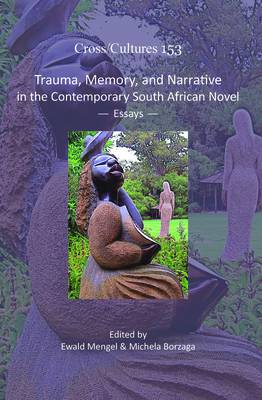
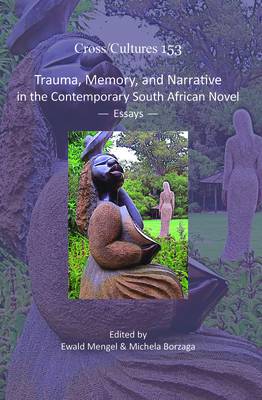
The contributions to this volume probe the complex relationship of trauma, memory, and narrative. By looking at the South African situation through the lens of trauma, they make clear how the psychic deformations and injuries left behind by racism and colonialism cannot be mended by material reparation or by simply reversing economic and political power-structures. Western trauma theories - as developed by scholars such as Caruth, van der Kolk, Herman and others - are insufficient for analysing the more complex situation in a postcolony such as South Africa. This is because Western trauma concepts focus on the individual traumatized by a single identifiable event that causes PTSD (Post Traumatic Stress Disorder). What we need is an understanding of trauma that sees it not only as a result of an identifiable event but also as the consequence of an historical condition - in the case of South Africa, that of colonialism, and, more specifically, of apartheid. For most black and coloured South Africans, the structural violence of apartheid's laws were the existential condition under which they had to exist. The living conditions in the townships, pass laws, relocation, and racial segregation affected great parts of the South African population and were responsible for the collective traumatization of several generations. This trauma, however, is not an unclaimed (and unclaimable) experience. Postcolonial thinkers who have been reflecting on the experience of violence and trauma in a colonial context, writing from within a Fanonian tradition, have, on the contrary, believed in the importance of reclaiming the past and of transcending mechanisms of victimization and resentment, so typical of traumatized consciousnesses. Narration and the novel have a decisive role to play here.
Spécifications
Parties prenantes
- Auteur(s) :
- Editeur:
Contenu
- Nombre de pages :
- 403
- Langue:
- Anglais
- Collection :
- Tome:
- n° 153
Caractéristiques
- EAN:
- 9789042035706
- Date de parution :
- 01-01-12
- Format:
- Livre relié
- Format numérique:
- Genaaid
- Dimensions :
- 152 mm x 229 mm
- Poids :
- 807 g


Seulement chez Librairie Club
+ 204 points sur votre carte client de Librairie Club
Cadeau


Les avis
Nous publions uniquement les avis qui respectent les conditions requises. Consultez nos conditions pour les avis.