


- Retrait en 2 heures
- Assortiment impressionnant
- Paiement sécurisé
- Toujours un magasin près de chez vous
- Retrait en 2 heures
- Assortiment impressionnant
- Paiement sécurisé
- Toujours un magasin près de chez vous



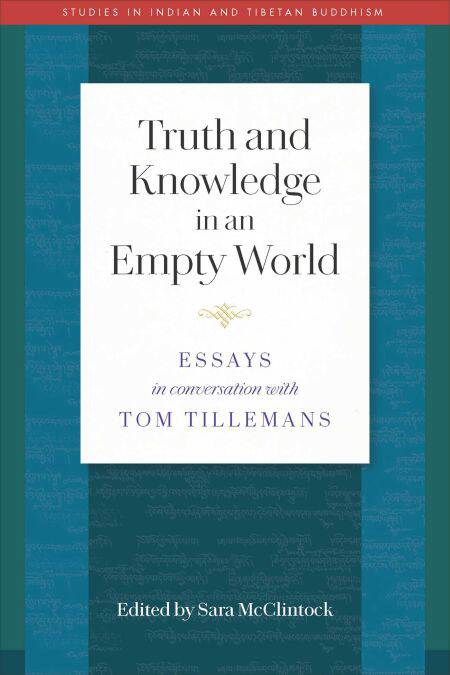
Truth and Knowledge in an Empty World EBOOK
Essays in Conversation with Tom Tillemans
Sara L. McClintock
30,19 €
+ 30 points
Description
In Truth and Knowledge in an Empty World, sixteen leading experts in Buddhist philosophy tackle complex problems of how we can gain reliable knowledge when both the knower and what is known are empty of any intrinsic identity.
The Dutch-Canadian philosopher Tom J. F. Tillemans has been influential in the field of Buddhist philosophy for decades, and the seventeen contributions to this volume celebrate that influence by engaging some of his core ideas about the nature and possibility of truth and knowledge, particularly in the Madhyamaka stream of Buddhist thought initiated in India by Nagarjuna and continued by Tibetan philosophers.
Should Buddhists refrain from analyzing quotidian truths and thus remain content with popular opinion? Or should Buddhists seek ways to critique and reform customary truths in the interest of reducing ignorance? If the latter, what criteria should guide the critique? If, as Nagarjuna argues with his philosophy of emptiness, there are no metaphysical foundations for our epistemological practices, then to what may a Buddhist appeal in asserting that a given statement is either true or false? Readers will find here arguments about how Buddhists may avoid what Tom has labeled the "dismal slough" of relativism.
Tillemans has offered a variety of such solutions in his publications over the years, and here scholars extend his analyses, at times vehemently disagreeing and at other times suggesting nuanced extension or improvement of his ideas. As a tribute to Tillemans, the book highlights what has been central to his work: the unceasing commitment to questioning received wisdom.
As the volume’s editor, Sara McClintock has provided a marvelous introduction that provides both an account of Tillemans’ life and intellectual journey and a taste of the immense pleasure that may arise when having a philosophical conversation with Tom Tillemans.
Contents
Preface
Introduction: Conversations with Tom Tillemans
Part 1. Truth
Epistemology for Madhyamikas: How Many Hairs Are Falling?
Jay L. Garfield
Candrakirti on the Couch: Why Madhyamikas Need Analysis
Mark Siderits
Materials for the Study of Cowherds: Are Their Beliefs Normative for Candrakirti?
Dan Arnold
Candrakirti’s Tripartite Theory of Conventional Truths: A Case Against Typical-Atypical Readings
Sonam Thakchoe
Part 2. Knowledge
Can Emptiness Be Understood Philosophically?
Jose Ignacio Cabezon
Self-Knowledge and Attachment: A View from Madhyamaka
Jonardon Ganeri
Bhaviveka’s Proof Formulation in Light of Dignaga’s Logic
Shoryu Katsura
Stairway to Ultimate Truth: Gyamarwa’s Reinterpretation of the Satyadvayavibha?ga
Chizuko Yoshimizu
On Levels in Madhyamaka
John Dunne
One, Many, or Neither? Neither-One-Nor-Many Arguments in Dharmakirti’s Philosophy of Mind
Birgit Kellner
Negative Dialectics in Madhyamaka Practice
Kenneth Liberman
Symmetric Existential Dependence Relations in Madhyamaka
Jan Westerhoff
Part 3. World
Whose World Is This? Reflections on Customary Truth
Sara McClintock
The World Is Not Enough: An Early Tibetan Discussion on the Division of Customary Truth
Pascale Hugon
Unity of the Two Truths: Some Sources and Implications of a Central Buddhist Tantric Doctrine
David Higgins
Part 4. Reflections and Responses
On Truth, Knowledge, Typical/Atypical Madhyamaka Philosophies, and the Science of Tuesdays
Tom J. F. Tillemans
Index
About the Contributors
The Dutch-Canadian philosopher Tom J. F. Tillemans has been influential in the field of Buddhist philosophy for decades, and the seventeen contributions to this volume celebrate that influence by engaging some of his core ideas about the nature and possibility of truth and knowledge, particularly in the Madhyamaka stream of Buddhist thought initiated in India by Nagarjuna and continued by Tibetan philosophers.
Should Buddhists refrain from analyzing quotidian truths and thus remain content with popular opinion? Or should Buddhists seek ways to critique and reform customary truths in the interest of reducing ignorance? If the latter, what criteria should guide the critique? If, as Nagarjuna argues with his philosophy of emptiness, there are no metaphysical foundations for our epistemological practices, then to what may a Buddhist appeal in asserting that a given statement is either true or false? Readers will find here arguments about how Buddhists may avoid what Tom has labeled the "dismal slough" of relativism.
Tillemans has offered a variety of such solutions in his publications over the years, and here scholars extend his analyses, at times vehemently disagreeing and at other times suggesting nuanced extension or improvement of his ideas. As a tribute to Tillemans, the book highlights what has been central to his work: the unceasing commitment to questioning received wisdom.
As the volume’s editor, Sara McClintock has provided a marvelous introduction that provides both an account of Tillemans’ life and intellectual journey and a taste of the immense pleasure that may arise when having a philosophical conversation with Tom Tillemans.
Contents
Preface
Introduction: Conversations with Tom Tillemans
Part 1. Truth
Epistemology for Madhyamikas: How Many Hairs Are Falling?
Jay L. Garfield
Candrakirti on the Couch: Why Madhyamikas Need Analysis
Mark Siderits
Materials for the Study of Cowherds: Are Their Beliefs Normative for Candrakirti?
Dan Arnold
Candrakirti’s Tripartite Theory of Conventional Truths: A Case Against Typical-Atypical Readings
Sonam Thakchoe
Part 2. Knowledge
Can Emptiness Be Understood Philosophically?
Jose Ignacio Cabezon
Self-Knowledge and Attachment: A View from Madhyamaka
Jonardon Ganeri
Bhaviveka’s Proof Formulation in Light of Dignaga’s Logic
Shoryu Katsura
Stairway to Ultimate Truth: Gyamarwa’s Reinterpretation of the Satyadvayavibha?ga
Chizuko Yoshimizu
On Levels in Madhyamaka
John Dunne
One, Many, or Neither? Neither-One-Nor-Many Arguments in Dharmakirti’s Philosophy of Mind
Birgit Kellner
Negative Dialectics in Madhyamaka Practice
Kenneth Liberman
Symmetric Existential Dependence Relations in Madhyamaka
Jan Westerhoff
Part 3. World
Whose World Is This? Reflections on Customary Truth
Sara McClintock
The World Is Not Enough: An Early Tibetan Discussion on the Division of Customary Truth
Pascale Hugon
Unity of the Two Truths: Some Sources and Implications of a Central Buddhist Tantric Doctrine
David Higgins
Part 4. Reflections and Responses
On Truth, Knowledge, Typical/Atypical Madhyamaka Philosophies, and the Science of Tuesdays
Tom J. F. Tillemans
Index
About the Contributors
Spécifications
Parties prenantes
- Auteur(s) :
- Editeur:
Contenu
- Nombre de pages :
- 392
- Langue:
- Anglais
- Collection :
Caractéristiques
- EAN:
- 9798890700377
- Date de parution :
- 22-06-26
- Format:
- Ebook
- Protection digitale:
- Adobe DRM
- Format numérique:
- ePub


Seulement chez Librairie Club
+ 30 points sur votre carte client de Librairie Club
Cadeau


Les avis
Nous publions uniquement les avis qui respectent les conditions requises. Consultez nos conditions pour les avis.