


- Retrait en 2 heures
- Assortiment impressionnant
- Paiement sécurisé
- Toujours un magasin près de chez vous
- Retrait en 2 heures
- Assortiment impressionnant
- Paiement sécurisé
- Toujours un magasin près de chez vous



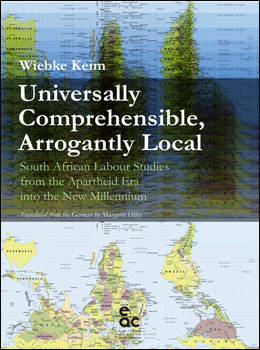
Universally Comprehensible, Arrogantly Local
South African Labour Studies from the Apartheid Era into the New Millennium
Wiebke Keim
Livre broché | Anglais
41,71 €
+ 83 points
Description
From the perspective of the international scholarly community under North Atlantic domination, South Africa might look like a peripheral place of knowledge production. In recent years, a plethora of voices calling for provincializing Europe, for deconstructing Eurocentrism and for adopting post- and decolonial perspectives have challenged such views. They have partly transformed the academic landscape, but have had limited success in challenging the fundamental global divides in production, circulation and recognition of social scientific knowledge. This book chooses a different take on the question of how North Atlantic domination could be challenged, by conceptualizing counter-hegemonic currents in international sociology. Instead of providing theoretical and deconstructive critiques, counter-hegemonic currents are effective through collective social scientific practice: the production of data, knowledge and texts, of new generations of scholars, the interaction with extra-university actors, leading to the gradual emergence of integrated and productive scientific communities. Their orientation towards local arenas of discussion and production of socially relevant research effectively reduces the belief in the hegemony of the North. The historical development of South African labour studies is a case in point. This study provides a systematic, in-depth analysis of research and teaching activities, networks with extra-academic actors and international cooperation over time in the three major Labour Studies centres: Johannesburg, Durban and Cape Town. It draws on a rich variety of material, including annual reports of research centres and labour service organizations, teaching contents and exam questions, the 1974-2 3 volumes of the “South African Labour Bulletin” and newsletters of ISA Research Committee 44 on Labour Movements. Qualitative analysis of four seminal books is used to assess their contribution to original, general theory-building. In-depth interviews with Labour Studies representatives complement the analysis of documents and literature by reconstructing the oral history of this scholarly community, an indispensable source given that many debates could not appear in written form or had to be watered during the Apartheid years. The study concludes that over time, South African social scientists have generated knowledge on labour, industry and trade unions that is universally comprehensible, but arrogantly local.
Spécifications
Parties prenantes
- Auteur(s) :
- Traducteur(s):
- Editeur:
Contenu
- Nombre de pages :
- 330
- Langue:
- Anglais
Caractéristiques
- EAN:
- 9782813001825
- Date de parution :
- 01-04-2017
- Format:
- Livre broché
- Dimensions :
- 170 mm x 240 mm
- Poids :
- 613 g


Seulement chez Librairie Club
+ 83 points sur votre carte client de Librairie Club
Cadeau


Les avis
Nous publions uniquement les avis qui respectent les conditions requises. Consultez nos conditions pour les avis.