


- Retrait en 2 heures
- Assortiment impressionnant
- Paiement sécurisé
- Toujours un magasin près de chez vous
- Retrait en 2 heures
- Assortiment impressionnant
- Paiement sécurisé
- Toujours un magasin près de chez vous



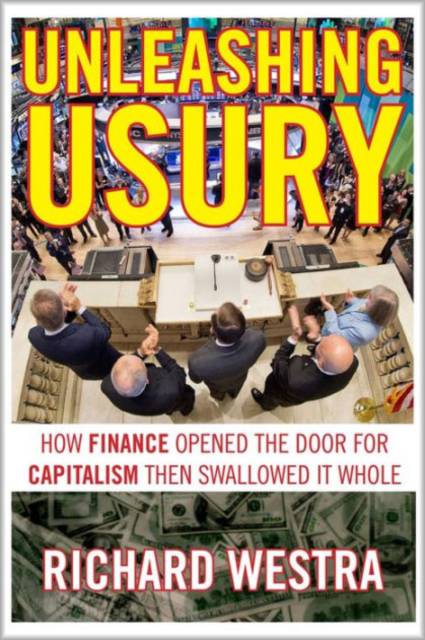
Unleashing Usury
How Finance Opened the Door to Capitalism Then Swallowed It Whole
Richard Westra
Livre broché | Anglais
34,95 €
+ 69 points
Description
Richard Westra argues that changes across the capitalist world at the turn of the 21st century put into play a global financial system which operates as a reincarnation of ancient usury.
The book reexamines the historical record to show how activities of antediluvian money lending brought Western civilization to the brink of collapse. Usury corrupted princes and kings by indulging their conspicuous consumption. It forced them to bleed their populations to fuel their possessive lust. And it fomented vicious cycles of indebtedness in the wars it compelled. Money lending to merchants spread the commercial economy that intervened between producers and consumers driving populations into debt and dispossessing them of their land.
What saved Western civilization was the rise of capitalism. Capitalism tamed the activities of money lending, and endowed them with socially redeeming value. The cost of borrowing was rationally set in money markets. Bank credit was offered in anticipation of incomes generated by its determinate use. All in all, capitalism tethered finance to expanding production of material goods and increased social wealth.
But, as the 20th century drew to a close, with capital no longer scarce as exemplified by the aimless bloating of varying categories of funds, finance again turned to its dark side. With the disarticulating of production through globalization, there existed no possibility for bloating funds to ever be converted into real capital with determinate, socially redeeming use. Instead, systemic rule changes empowered big banks, big investment firms and finance wings of giant corporations to unleash vast oceans of funds in a global orgy of money games.
However, the global financial system of casino play can only operate akin to ancient usury. Wealth for the few is expanded by expropriation and Himalayan levels of debt befalling the many! Like usurers of old the new Merchants of Venice are indifferent to how lent funds are used. And loan repayment is set arbitrarily, often exacting such a high cost that the borrower is ruined or forced to strive for the ruin of others. Big government becomes the handmaiden sweeping as much debt under the public rug as it can. Yet there is only so much in pounds of flesh left on the bones of humanity. Greece is really just the hors d'oeuvre.
The book reexamines the historical record to show how activities of antediluvian money lending brought Western civilization to the brink of collapse. Usury corrupted princes and kings by indulging their conspicuous consumption. It forced them to bleed their populations to fuel their possessive lust. And it fomented vicious cycles of indebtedness in the wars it compelled. Money lending to merchants spread the commercial economy that intervened between producers and consumers driving populations into debt and dispossessing them of their land.
What saved Western civilization was the rise of capitalism. Capitalism tamed the activities of money lending, and endowed them with socially redeeming value. The cost of borrowing was rationally set in money markets. Bank credit was offered in anticipation of incomes generated by its determinate use. All in all, capitalism tethered finance to expanding production of material goods and increased social wealth.
But, as the 20th century drew to a close, with capital no longer scarce as exemplified by the aimless bloating of varying categories of funds, finance again turned to its dark side. With the disarticulating of production through globalization, there existed no possibility for bloating funds to ever be converted into real capital with determinate, socially redeeming use. Instead, systemic rule changes empowered big banks, big investment firms and finance wings of giant corporations to unleash vast oceans of funds in a global orgy of money games.
However, the global financial system of casino play can only operate akin to ancient usury. Wealth for the few is expanded by expropriation and Himalayan levels of debt befalling the many! Like usurers of old the new Merchants of Venice are indifferent to how lent funds are used. And loan repayment is set arbitrarily, often exacting such a high cost that the borrower is ruined or forced to strive for the ruin of others. Big government becomes the handmaiden sweeping as much debt under the public rug as it can. Yet there is only so much in pounds of flesh left on the bones of humanity. Greece is really just the hors d'oeuvre.
Spécifications
Parties prenantes
- Auteur(s) :
- Editeur:
Contenu
- Nombre de pages :
- 232
- Langue:
- Anglais
Caractéristiques
- EAN:
- 9780986085338
- Date de parution :
- 15-04-16
- Format:
- Livre broché
- Format numérique:
- Trade paperback (VS)
- Dimensions :
- 152 mm x 226 mm
- Poids :
- 362 g


Seulement chez Librairie Club
+ 69 points sur votre carte client de Librairie Club
Cadeau


Les avis
Nous publions uniquement les avis qui respectent les conditions requises. Consultez nos conditions pour les avis.