


- Retrait en 2 heures
- Assortiment impressionnant
- Paiement sécurisé
- Toujours un magasin près de chez vous
- Retrait en 2 heures
- Assortiment impressionnant
- Paiement sécurisé
- Toujours un magasin près de chez vous



177,45 €
+ 354 points
Description
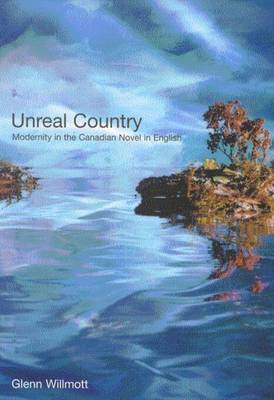
This diverse yet distinctive Canadian modernity is explored in Unreal Country. Referring to a wide range of novels and drawing on scholarship in geography, history, and cultural studies, Glenn Willmott argues that the postcolonial rhetoric of youth coincided with - and influenced - Canadian modernism's own uncertain identity within a post-traditional, globally migrant, and interdependent society.
Modernism is one of the great manifold movements in literature and the arts. Responding with magnificent independence to inherited values and tastes, and with radical novelty to the future, varieties of modernism anxiously express both the ends of the Enlightenment and the beginnings of Postmodernism, and thus the feeling of a crisis that continues to haunt contemporary life. Modernity in Canada, stretching from the turn of the century to the 1950s, is a period marked by unprecedented urban and industrial growth, by urban and rural immigration from around the world, and by unique changes in power between regions, classes, races, and sexes. At the same time it is a period profoundly aware of the colonial past and its persistence, for good or ill, in the fragile economy and volatile culture of a new nation.Spécifications
Parties prenantes
- Auteur(s) :
- Editeur:
Contenu
- Nombre de pages :
- 248
- Langue:
- Anglais
Caractéristiques
- EAN:
- 9780773523968
- Date de parution :
- 29-08-02
- Format:
- Livre relié
- Format numérique:
- Genaaid
- Dimensions :
- 156 mm x 241 mm
- Poids :
- 530 g


Seulement chez Librairie Club
+ 354 points sur votre carte client de Librairie Club
Cadeau


Les avis
Nous publions uniquement les avis qui respectent les conditions requises. Consultez nos conditions pour les avis.