


- Retrait en 2 heures
- Assortiment impressionnant
- Paiement sécurisé
- Toujours un magasin près de chez vous
- Retrait en 2 heures
- Assortiment impressionnant
- Paiement sécurisé
- Toujours un magasin près de chez vous



213,95 €
+ 427 points
Description
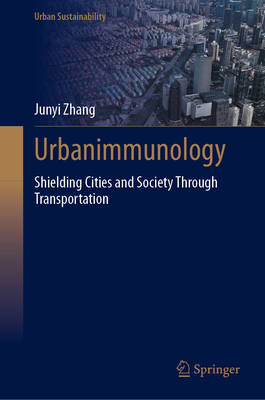
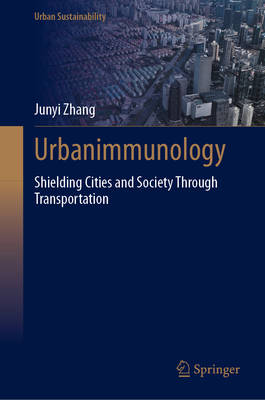
This book introduces a transformative framework for rethinking how transportation systems shape, protect, and sustain urban and societal life. Drawing inspiration from the principles of immunology, this book redefines transportation as a living, self-regulating system--one that defends cities and society from disruptions, regenerates after crises, and adapts continuously to change. Going far beyond traditional views of mobility, the book explores how transportation interacts with energy, materials, tourism, health, and regional development to form an integrated urban and societal ecosystem. Through this immune-inspired lens, transportation is not an isolated sector but a circulatory and defensive network--a central mechanism through which cities and society maintain balance, vitality, and resilience. Each chapter bridges multiple disciplines. Readers will discover how renewable energy systems can be harmonized with transportation through immune-based control; how AI-driven traffic management supports adaptive responses; how low-altitude mobility and cross-border logistics strengthen regional immunity; and how tourism and public health policies can be integrated into a shared framework for sustainable urban vitality. The proposed Transportation Immune System (TIS) exemplifies this vision--an intelligent, adaptive infrastructure capable of detecting threats, responding dynamically, and facilitating systemic recovery. Through a systems-thinking approach, this book shows how transportation can serve as the metabolic and immune backbone of cities and society. It goes beyond simply moving people and goods to mobilize energy, data, and resources in ways that enhance collective resilience and vitality. Supported by immune-informed policy frameworks, this vision bridges sectors and promotes cross-disciplinary collaboration. Aimed at researchers, planners, policymakers, educators, and students, this book presents a bold roadmap for designing the cities and societies of the future. It reimagines transportation as more than a mere mobility service--it becomes a life-sustaining, regenerative system that protects urban and societal health, fosters sustainable growth, and strengthens the interconnected fabric of our communities.
Spécifications
Parties prenantes
- Auteur(s) :
- Editeur:
Contenu
- Nombre de pages :
- 418
- Langue:
- Anglais
- Collection :
Caractéristiques
- EAN:
- 9789819553921
- Date de parution :
- 31-01-26
- Format:
- Livre relié
- Format numérique:
- Genaaid
- Dimensions :
- 156 mm x 234 mm
- Poids :
- 784 g


Seulement chez Librairie Club
+ 427 points sur votre carte client de Librairie Club
Cadeau


Les avis
Nous publions uniquement les avis qui respectent les conditions requises. Consultez nos conditions pour les avis.