


- Retrait en 2 heures
- Assortiment impressionnant
- Paiement sécurisé
- Toujours un magasin près de chez vous
- Retrait en 2 heures
- Assortiment impressionnant
- Paiement sécurisé
- Toujours un magasin près de chez vous



27,95 €
+ 55 points
Description
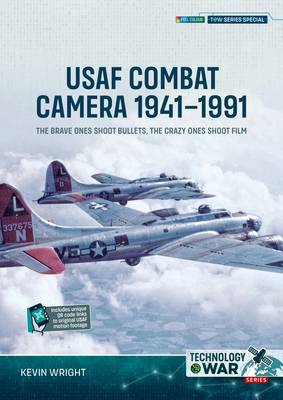
Since 1941, US Army Air Forces and US Air Force cameramen have photographed and filmed every major military conflict in which the United States was involved. Often a hazardous, and sometimes fatal, occupation, Joe Longo, a Second World War USAAF motion picture cameraman and later founder of the International Combat Camera Association, coined the phrase, 'The brave ones shoot bullets, the crazy ones shoot film'.
During war and peace, these men, and later women, have filmed aircraft, missile and weapons tests, made training films and produced news and public relations imagery documenting every aspect of US Air Force activity.
Whilst some World War Two productions, like Memphis Belle: A Story of a Flying Fortress and The Last Bomb, which followed B-29 missions over Japan, rightly gained wide public acclaim, the vast majority of their often classified work was for the Pentagon's eyes only. Their main responsibility was to keep senior Air Force commanders and decision-makers informed about current activities and record the challenges they faced in the field and in the air.
Combat Camera charts those activities from their urgent beginnings in Hollywood on the outbreak of World War Two, through documenting bomber operations over Europe and Japan, D-Day and the liberation of Europe, up to the dropping of atomic bombs on Hiroshima and Nagasaki. Their story continued through the Korean War, Vietnam, Grenada, Panama, up to the 1991 Gulf War.
These events are explored through a mix of personal accounts from combat cameramen and women, individual acts of heroism, the impact of organisational changes, describing the introduction and operation of new weapons systems, and the observation of historic events. Combat Camera captures the work of these remarkable men and women, produced in cooperation with members of the USAF Combat Camera Association.
USAF Combat Camera 1941-1991: The Brave Ones Shoot Bullets, The Crazy Ones Shoot Film, is profusely illustrated with colour and black-and-white images and includes unique links to original motion footage shot by the US Combat Camera personnel.
During war and peace, these men, and later women, have filmed aircraft, missile and weapons tests, made training films and produced news and public relations imagery documenting every aspect of US Air Force activity.
Whilst some World War Two productions, like Memphis Belle: A Story of a Flying Fortress and The Last Bomb, which followed B-29 missions over Japan, rightly gained wide public acclaim, the vast majority of their often classified work was for the Pentagon's eyes only. Their main responsibility was to keep senior Air Force commanders and decision-makers informed about current activities and record the challenges they faced in the field and in the air.
Combat Camera charts those activities from their urgent beginnings in Hollywood on the outbreak of World War Two, through documenting bomber operations over Europe and Japan, D-Day and the liberation of Europe, up to the dropping of atomic bombs on Hiroshima and Nagasaki. Their story continued through the Korean War, Vietnam, Grenada, Panama, up to the 1991 Gulf War.
These events are explored through a mix of personal accounts from combat cameramen and women, individual acts of heroism, the impact of organisational changes, describing the introduction and operation of new weapons systems, and the observation of historic events. Combat Camera captures the work of these remarkable men and women, produced in cooperation with members of the USAF Combat Camera Association.
USAF Combat Camera 1941-1991: The Brave Ones Shoot Bullets, The Crazy Ones Shoot Film, is profusely illustrated with colour and black-and-white images and includes unique links to original motion footage shot by the US Combat Camera personnel.
Spécifications
Parties prenantes
- Auteur(s) :
- Editeur:
Contenu
- Nombre de pages :
- 152
- Langue:
- Anglais
- Collection :
Caractéristiques
- EAN:
- 9781806720576
- Date de parution :
- 15-06-26
- Format:
- Livre broché
- Format numérique:
- Trade paperback (VS)
- Dimensions :
- 210 mm x 298 mm


Seulement chez Librairie Club
+ 55 points sur votre carte client de Librairie Club
Cadeau


Les avis
Nous publions uniquement les avis qui respectent les conditions requises. Consultez nos conditions pour les avis.