


- Retrait en 2 heures
- Assortiment impressionnant
- Paiement sécurisé
- Toujours un magasin près de chez vous
- Retrait gratuit dans votre magasin Club
- 7.000.0000 titres dans notre catalogue
- Payer en toute sécurité
- Toujours un magasin près de chez vous



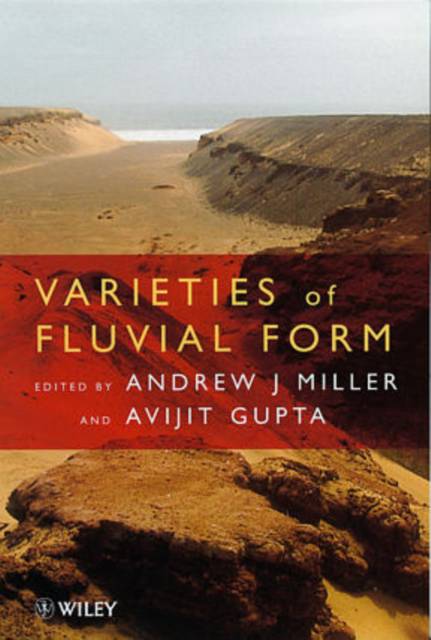
Description
This collection of papers is based largely on contributions by participants in a series of special sessions at the June 1995 South East Asia Conference of the International Association of Geomorphologists. The concept that draws these papers together is best explained in the following excerpt from the call for papers that was issued in advance of the conference: The purpose of this special session is to provide an opportunity for discussion of the diversity of fluvial forms that may arise in unusual settings These may include settings where external forcing factors exert a powerful influence precluding or modifying the type of equilibrium form that is expected to develop under quasi-stable conditions in an alluvial channel: for example, patterns of response to tectonic activity longitudinal variations in channel and floodplain form associated with spatially varying patterns of bedrock lithology or jointing arid region rivers with longitudinal discharge trends that are not mono-tonically increasing. Also of potential interest are morphological features forming under climatic/hydrologic regimes associated with monsoon, tropical wet, extremely arid or extremely cold environments; or patterns of vegetation distribution that exert a controlling influence on channel form. It is hoped that the papers contributed to this session will encompass a broad range of geographic as well as morphological diversity. The underlying premise was that the world s rivers encompass a wide range of influences and associated fluvial forms, but that the geomorphic literature traditionally has focused most intensively on a subset of those forms (mostly comprised of alluvial rivers from humid temperate, semiarid or proglacial environments), and may not treat a spectrum of morphological types that is proportionately representative of the rivers that actually exist on the earth s surface. Thus the intention of this volume is, first and foremost, to present an international set of case studies with a strong descriptive component, representing the diversity of fluvial forms. To quote Baker and Komatsu in the opening paper of this volume "excitement and pleasure in science derive not so much from achieving the final explanation as from discovering the fascinating range of new phenomena to be explained". It is our hope that readers of this volume will share some of that excitement and pleasure.
Spécifications
Parties prenantes
- Auteur(s) :
- Editeur:
Contenu
- Nombre de pages :
- 544
- Langue:
- Anglais
- Collection :
- Tome:
- n° 4
Caractéristiques
- EAN:
- 9780471973515
- Date de parution :
- 12-03-99
- Format:
- Livre relié
- Format numérique:
- Genaaid
- Dimensions :
- 175 mm x 253 mm
- Poids :
- 1029 g


Seulement chez Librairie Club
+ 874 points sur votre carte client de Librairie Club
Cadeau

Cadeau


Les avis
Nous publions uniquement les avis qui respectent les conditions requises. Consultez nos conditions pour les avis.