


- Retrait en 2 heures
- Assortiment impressionnant
- Paiement sécurisé
- Toujours un magasin près de chez vous
- Retrait en 2 heures
- Assortiment impressionnant
- Paiement sécurisé
- Toujours un magasin près de chez vous



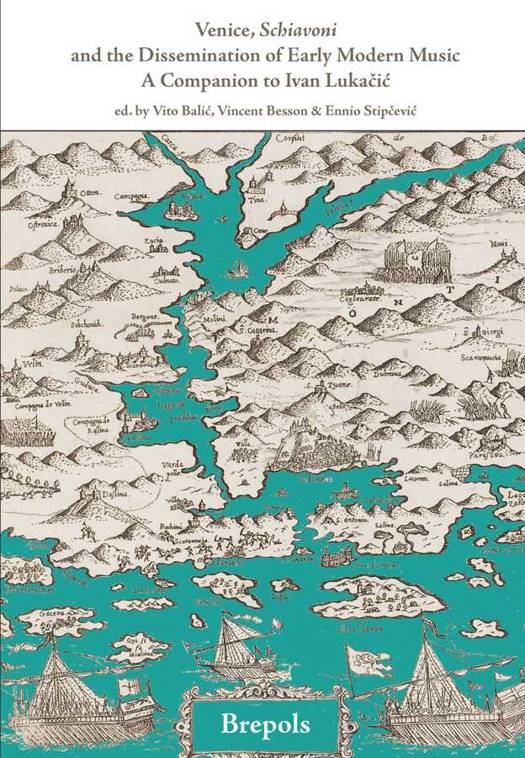
Venice, Schiavoni and the Dissemination of Early Modern Music
A Companion to Ivan Lukacic
Ennio Stipčević
63,60 €
+ 127 points
Description
Ivan Lukacic (born around 1585, died in 1648), composer, Conventual Franciscan, long-time "maestro di cappella" of the cathedral in Split, is a typical "hero" of local historiography. As early as 1935, the Croatian-American musicologist Dragan Plamenac (real name Karl Siebenschein) prepared a selection from the only known collection of Lukacic's compositions, the Sacrae cantiones (Venice, 1620). In the same year, Plamenac introduced Croatian Renaissance and Baroque music to the local audience for the first time at a concert held at the Croatian Music Institute. In the aftermath of Plamenac's emigration to the USA in 1939, it took several decades for new archival, stylistic, interdisciplinary, and international research in Croatian musicology to take place. Despite the availability of earlier material as well as contemporary musical publications of Luka?i?'s work (J. Andreis, Zagreb, 1970; E. Stipcevic, Padua, 1986), it is not an exaggeration to say that Lukacic still remains unknown internationally. For many years, a number of studies of Lukacic and the music of his contemporaries from the "other, eastern coast of the Adriatic" published almost exclusively in Croatian and thus the international professional public had very limited access to them. This collection of studies dedicated to Lukacic and to the musical and cultural contacts between the two Adriatic coasts is the first volume to be published in both English and Italian. The echoes of the contacts between Italy and Croatia reached the Royal Palace in Portugal, shops selling printed music in Denmark and church archives in Slovenia and Poland. The aim of this book is to follow the traces of that cultural dissemination.
Spécifications
Parties prenantes
- Auteur(s) :
- Editeur:
Contenu
- Nombre de pages :
- 288
- Langue:
- Anglais
- Collection :
Caractéristiques
- EAN:
- 9782503601953
- Date de parution :
- 11-08-22
- Format:
- Livre broché
- Format numérique:
- Trade paperback (VS)
- Dimensions :
- 177 mm x 253 mm
- Poids :
- 7706 g



Seulement chez Librairie Club
+ 127 points sur votre carte client de Librairie Club
Cadeau


Les avis
Nous publions uniquement les avis qui respectent les conditions requises. Consultez nos conditions pour les avis.