


- Retrait en 2 heures
- Assortiment impressionnant
- Paiement sécurisé
- Toujours un magasin près de chez vous
- Retrait gratuit dans votre magasin Club
- 7.000.0000 titres dans notre catalogue
- Payer en toute sécurité
- Toujours un magasin près de chez vous



Description
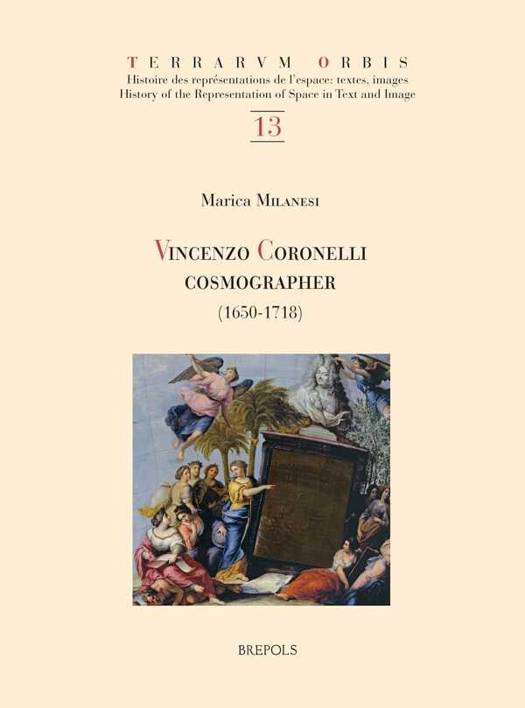
The Franciscan Vincenzo Coronelli (Venice, 1650-1718) was one of the most famous creators of globes and maps in the late seventeenth century. Neglected for much of the intervening period, his works are now highly prized on the antiquarian market. But scholars have lagged behind and studies on his cosmography remain, till now, partial, if not erroneous. The present study offers a detailed investigation of contemporary documents and Coronelli's own works. It throws new light on the man and his geographical and cosmographical interests, and puts this in the correct historical context. It also describes his astonishing career within the Church. His works are framed within the perspective of seventeenth-century knowledge of the representation of space, and places the scientific research of the period in its social milieu. The book is divided into three parts. Each part is devoted to a particular aspect of Coronelli's activities and sets them within the stages of his career. The first part focuses on the manufacture of two four-metre diameter globes for the Galerie des glaces at Versailles, subsequent production of these in smaller dimensions, and their marketing throughout Europe. The second part focuses on the workshop of the Frari, paying particular attention to Coronelli's role as a salesperson of writings and drawings about the war against the Ottomans, and as an editor of maps and plans, geographical atlases, illustrated books, and finally an unsuccessful encyclopaedia. This section also examines how manufacture within this workshop was organized, its finance, and the economic relations with colleagues, competitors, and clients. The third part examines the 'Cosmografo della Serenissima' and describes itssuccesses and failures, and the Accademia degli Argonauti and its links to princes and aristocrats, the Venetian republic, and the Republique des Lettres. An appendix is provided comprising transcripts of certain key documents discussed in the volume, and a list of maps that can be attributed to Coronelli.
Spécifications
Parties prenantes
- Auteur(s) :
- Editeur:
Contenu
- Nombre de pages :
- 472
- Langue:
- Anglais
- Collection :
- Tome:
- n° 13
Caractéristiques
- EAN:
- 9782503564616
- Date de parution :
- 31-10-16
- Format:
- Livre relié
- Format numérique:
- Genaaid
- Dimensions :
- 213 mm x 277 mm
- Poids :
- 1973 g



Seulement chez Librairie Club
+ 318 points sur votre carte client de Librairie Club
Cadeau

Cadeau


Les avis
Nous publions uniquement les avis qui respectent les conditions requises. Consultez nos conditions pour les avis.