


- Retrait en 2 heures
- Assortiment impressionnant
- Paiement sécurisé
- Toujours un magasin près de chez vous
- Retrait en 2 heures
- Assortiment impressionnant
- Paiement sécurisé
- Toujours un magasin près de chez vous



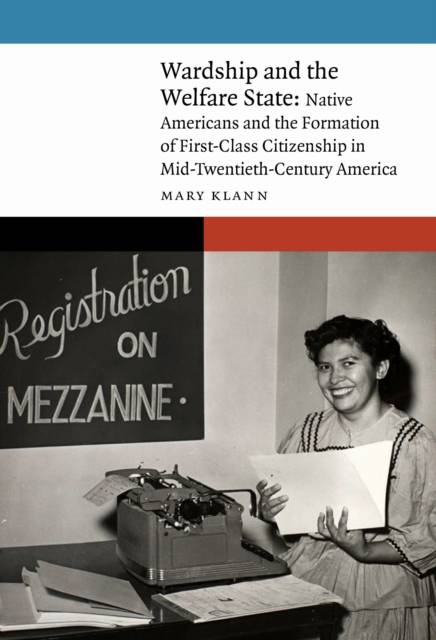
Wardship and the Welfare State
Native Americans and the Formation of First-Class Citizenship in Mid-Twentieth-Century America
Mary Klann
110,45 €
+ 220 points
Description
Wardship and the Welfare State examines the ideological dimensions and practical intersections of public policy and Native American citizenship, Indian wardship, and social welfare rights after World War II. By examining Native wardship's intersections with three pieces of mid-twentieth-century welfare legislation--the 1935 Social Security Act, the 1942 Servicemen's Dependents Allowance Act, and the 1944 GI Bill--Mary Klann traces the development of a new conception of first-class citizenship. Wardship and the Welfare State explores how policymakers and legislators have defined first-class citizenship against its apparent opposite, the much older and fraught idea of Indian wardship. Wards were considered dependent, while first-class citizens were considered independent. Wards were thought to receive gratuitous aid from the government, while first-class citizens were considered responsible. Critics of the federal welfare state's expansion in the 1930s through 1960s feared that as more Americans received government aid, they too could become dependent wards, victims of the poverty they saw on reservations. Because critics believed wardship prevented Native men and women from fulfilling expectations of work, family, and political membership, they advocated terminating Natives' trust relationships with the federal government. As these critics mistakenly equated wardship with welfare, state officials also prevented Native people from accessing needed welfare benefits. But to Native peoples wardship was not welfare and welfare was not wardship. Native nations and pan-Native organizations insisted on Natives' government-to-government relationships with the United States and maintained their rights to welfare benefits. In so doing, they rejected stereotyped portrayals of Natives' perpetual poverty and dependency and asserted and defined tribal sovereignty. By illuminating how assumptions about "gratuitous" government benefits limit citizenship, Wardship and the Welfare State connects Native people to larger histories of race, inequality, gender, and welfare in the twentieth-century United States.
Spécifications
Parties prenantes
- Auteur(s) :
- Editeur:
Contenu
- Nombre de pages :
- 326
- Langue:
- Anglais
- Collection :
Caractéristiques
- EAN:
- 9781496218179
- Date de parution :
- 01-06-24
- Format:
- Livre relié
- Format numérique:
- Genaaid
- Dimensions :
- 152 mm x 229 mm
- Poids :
- 648 g


Seulement chez Librairie Club
+ 220 points sur votre carte client de Librairie Club
Cadeau


Les avis
Nous publions uniquement les avis qui respectent les conditions requises. Consultez nos conditions pour les avis.