


- Retrait en 2 heures
- Assortiment impressionnant
- Paiement sécurisé
- Toujours un magasin près de chez vous
- Retrait en 2 heures
- Assortiment impressionnant
- Paiement sécurisé
- Toujours un magasin près de chez vous



48,95 €
+ 97 points
Description
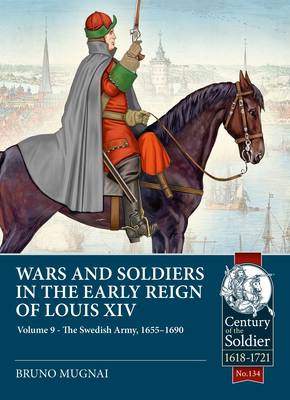
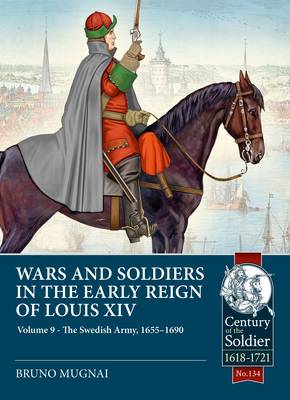
In the mid-seventeenth century, Sweden emerged as one of Europe's foremost military powers, achieving a level of influence and battlefield effectiveness that belied its limited population and economic resources. This volume examines how Sweden not only achieved this remarkable ascent, but sustained it through decades of almost continuous warfare against formidable opponents including Poland-Lithuania, Denmark-Norway, the Habsburg Monarchy, and Muscovy.
Rather than focusing solely on battlefield performance or leadership, the book places the organisation, structure, and material culture of the Swedish army at the centre of the analysis. It explores recruitment systems, regimental organisation, command structures, and the practical realities of maintaining armies in the field, demonstrating that Sweden's success rested on a coherent and innovative military system fully comparable to those of France or the Dutch Republic.
Covering the period from the wars of the 1650s through to the reforms of the later seventeenth century, the study is richly illustrated with detailed colour plates depicting infantry, cavalry, dragoons, artillery, and household troops, alongside uniforms, equipment, standards, guidons, and regimental colours. Many of these illustrations are supported by surviving originals held in Scandinavian and European museum collections, including captured colours and standards from Denmark and other theatres of war.
By integrating operational history with organisational analysis and visual evidence, this volume provides a comprehensive account of the Swedish army at the height of its power. It will be of interest not only to specialists in Scandinavian and early modern warfare, but also to readers concerned with the broader development of European armies, military administration, and the conduct of war in the seventeenth century.
Rather than focusing solely on battlefield performance or leadership, the book places the organisation, structure, and material culture of the Swedish army at the centre of the analysis. It explores recruitment systems, regimental organisation, command structures, and the practical realities of maintaining armies in the field, demonstrating that Sweden's success rested on a coherent and innovative military system fully comparable to those of France or the Dutch Republic.
Covering the period from the wars of the 1650s through to the reforms of the later seventeenth century, the study is richly illustrated with detailed colour plates depicting infantry, cavalry, dragoons, artillery, and household troops, alongside uniforms, equipment, standards, guidons, and regimental colours. Many of these illustrations are supported by surviving originals held in Scandinavian and European museum collections, including captured colours and standards from Denmark and other theatres of war.
By integrating operational history with organisational analysis and visual evidence, this volume provides a comprehensive account of the Swedish army at the height of its power. It will be of interest not only to specialists in Scandinavian and early modern warfare, but also to readers concerned with the broader development of European armies, military administration, and the conduct of war in the seventeenth century.
Spécifications
Parties prenantes
- Auteur(s) :
- Editeur:
Contenu
- Nombre de pages :
- 350
- Langue:
- Anglais
- Collection :
Caractéristiques
- EAN:
- 9781806720842
- Date de parution :
- 15-04-26
- Format:
- Livre broché
- Format numérique:
- Trade paperback (VS)
- Dimensions :
- 180 mm x 246 mm
- Poids :
- 793 g


Seulement chez Librairie Club
+ 97 points sur votre carte client de Librairie Club
Cadeau


Les avis
Nous publions uniquement les avis qui respectent les conditions requises. Consultez nos conditions pour les avis.