


- Retrait en 2 heures
- Assortiment impressionnant
- Paiement sécurisé
- Toujours un magasin près de chez vous
- Retrait gratuit dans votre magasin Club
- 7.000.0000 titres dans notre catalogue
- Payer en toute sécurité
- Toujours un magasin près de chez vous



34,95 €
+ 69 points
Description
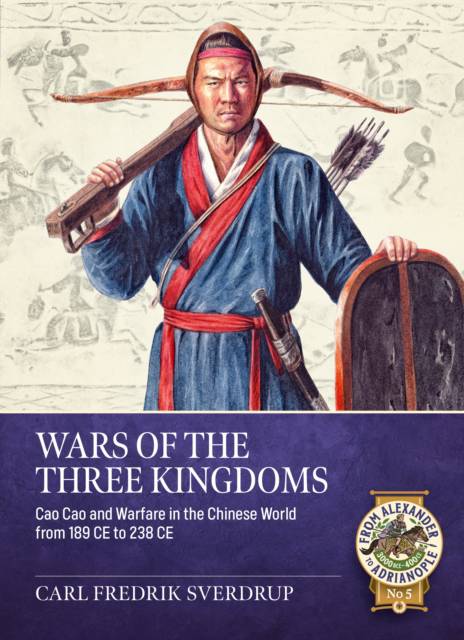
The fall of the Later Han dynasty plunged China into one of the most dramatic and formative periods of its long military history. Amid rebellion, regional fragmentation and bitter civil war, rival warlords struggled for supremacy in what would become known as the Wars of the Three Kingdoms. At the centre of this storm stood Cao Cao -- statesman, poet, strategist and one of the most controversial figures in Chinese history.
In popular culture, Cao Cao is often depicted as a ruthless schemer and erratic commander, a near-villain in the epic tradition of the Romance of the Three Kingdoms. Yet such portrayals owe much to later literary embellishment and hostile propaganda. In Wars of the Three Kingdoms, Carl Fredrik Sverdrup returns to the primary sources to reconstruct Cao Cao's military career in its true operational and political context. Stripping away centuries of myth and moral judgement, this study reassesses his campaigns with fresh analytical clarity.
From the chaos of the Yellow Turban Rebellion in 189 CE through to the consolidation of northern China under Cao Cao's authority, this book traces the evolution of warfare in a fractured imperial world. It examines the organisation of armies, the logistical challenges of campaigning across vast territories, the use of fortified cities and river systems, and the shifting alliances that defined the era. Cao Cao's conduct of operations -- his ability to recover from setbacks, exploit rivalries, and impose strategic coherence upon disorder -- is evaluated not as legend, but as military reality.
The narrative does not end with Cao Cao's death in 220 CE. The campaigns of Zhuge Liang and Sima Yi extend the story to 238 CE, offering a broader perspective on how the conflict matured and how the foundations of the later Jin dynasty were laid. Through these figures, the book explores the interplay between political authority, personal leadership and operational art in early imperial Chinese warfare.
Drawing upon extensive Chinese primary material and modern scholarship, Wars of the Three Kingdoms provides a detailed and critical military history of a period too often filtered through romantic fiction. It situates the struggles of Wei, Shu and Wu within the wider framework of state formation, institutional adaptation and the enduring traditions of Chinese strategic thought.
This is not simply a biography of a warlord, but a rigorous operational history of a transformative era. By revisiting the campaigns of Cao Cao and his contemporaries, Sverdrup offers readers a deeper understanding of how power was seized, defended and contested in the Chinese world at the dawn of the third century -- and why the legacy of these wars continues to resonate across East Asian history.
In popular culture, Cao Cao is often depicted as a ruthless schemer and erratic commander, a near-villain in the epic tradition of the Romance of the Three Kingdoms. Yet such portrayals owe much to later literary embellishment and hostile propaganda. In Wars of the Three Kingdoms, Carl Fredrik Sverdrup returns to the primary sources to reconstruct Cao Cao's military career in its true operational and political context. Stripping away centuries of myth and moral judgement, this study reassesses his campaigns with fresh analytical clarity.
From the chaos of the Yellow Turban Rebellion in 189 CE through to the consolidation of northern China under Cao Cao's authority, this book traces the evolution of warfare in a fractured imperial world. It examines the organisation of armies, the logistical challenges of campaigning across vast territories, the use of fortified cities and river systems, and the shifting alliances that defined the era. Cao Cao's conduct of operations -- his ability to recover from setbacks, exploit rivalries, and impose strategic coherence upon disorder -- is evaluated not as legend, but as military reality.
The narrative does not end with Cao Cao's death in 220 CE. The campaigns of Zhuge Liang and Sima Yi extend the story to 238 CE, offering a broader perspective on how the conflict matured and how the foundations of the later Jin dynasty were laid. Through these figures, the book explores the interplay between political authority, personal leadership and operational art in early imperial Chinese warfare.
Drawing upon extensive Chinese primary material and modern scholarship, Wars of the Three Kingdoms provides a detailed and critical military history of a period too often filtered through romantic fiction. It situates the struggles of Wei, Shu and Wu within the wider framework of state formation, institutional adaptation and the enduring traditions of Chinese strategic thought.
This is not simply a biography of a warlord, but a rigorous operational history of a transformative era. By revisiting the campaigns of Cao Cao and his contemporaries, Sverdrup offers readers a deeper understanding of how power was seized, defended and contested in the Chinese world at the dawn of the third century -- and why the legacy of these wars continues to resonate across East Asian history.
Spécifications
Parties prenantes
- Auteur(s) :
- Editeur:
Contenu
- Nombre de pages :
- 200
- Langue:
- Anglais
- Collection :
Caractéristiques
- EAN:
- 9781804518274
- Date de parution :
- 31-03-26
- Format:
- Livre broché
- Format numérique:
- Trade paperback (VS)
- Dimensions :
- 180 mm x 249 mm
- Poids :
- 489 g


Seulement chez Librairie Club
+ 69 points sur votre carte client de Librairie Club
Cadeau

Cadeau


Les avis
Nous publions uniquement les avis qui respectent les conditions requises. Consultez nos conditions pour les avis.