


En raison d'une grève chez bpost, des retards de livraison peuvent survenir. Besoin de quelque chose en urgence ? Optez pour un retrait en magasin ou rendez-vous dans une Librairie Club à proximité.
- Retrait en 2 heures
- Assortiment impressionnant
- Paiement sécurisé
- Toujours un magasin près de chez vous
En raison d'une grève chez bpost, des retards de livraison peuvent survenir. Besoin de quelque chose en urgence ? Optez pour un retrait en magasin ou rendez-vous dans une Librairie Club à proximité.
- Retrait en 2 heures
- Assortiment impressionnant
- Paiement sécurisé
- Toujours un magasin près de chez vous



6,99 €
Description
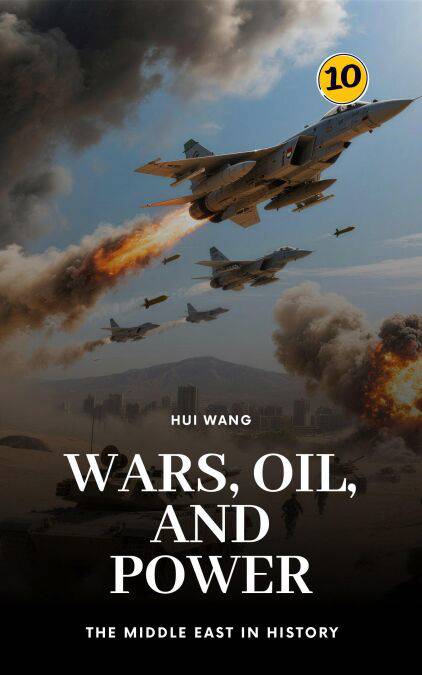
Wars, Oil, and Power: The Middle East in History, is my attempt to tell the story behind the headlines — the people, the pressures, and those hinge moments when history might still have gone a different way. The book begins six days before the storm, when leaders such as Gamal Abdel Nasser, David Ben-Gurion, and King Hussein were all making fateful choices under unbearable strain. From the Suez Canal to Jerusalem, this is a tale of how power was tested, how fear spread like wildfire, and how a region slowly slid toward a war that would change everything.
I take readers deep into Nasser's world: his nationalization and control of the Suez Canal, his gamble to claim pan‑Arab leadership, the drain and human cost of Egypt's intervention in the North Yemen Civil War, and his dramatic decision in May 1967 to close the Straits of Tiran to Israeli shipping. These were not isolated acts or theatrics; they were moves in a wider game involving Egypt, Israel, Jordan, and the great powers watching and calculating from afar. The book traces how Gaza, the UN Emergency Force, and the remaining fragile barriers to open conflict slowly crumbled, until the region finally tipped into war.
On the Israeli side, the story follows the hard choices made behind closed doors. You'll witness David Ben‑Gurion's hush‑hush nuclear program, the shock and outrage of the Samu Raid, and the fraught debates that ultimately pushed Israel toward a preemptive strike. I lead you through the quiet, high‑stakes diplomatic and intelligence contacts with Washington — including covert missions involving figures like Meir Amit — and then into Operation Focus, the air assault that determined the war's opening hours.
On the battlefield, commanders such as Ariel Sharon — not as mythic heroes but as officers in the chaos of Gaza and the Sinai — appear facing confusion, risk, and brutal, immediate choices. The Six‑Day War itself rushes by with blinding speed, yet the book does not stop once the guns fall silent. I trace how that brief, seismic conflict remade the Middle East, redrawing borders and refashioning beliefs and ambitions. From the streets of Jerusalem to the shadowed symbolism of Armageddon, religion and politics collide, while Charles de Gaulle's public break with Israel marks a major realignment on the global stage.
I wrote this book because the war everyone assumed ended in 1967 never really vanished. The final chapters trace how that short, brutal conflict — the Six-Day War — mutated into something far more enduring, laying the groundwork for decades of violence, politics, and grudges that followed.
Spécifications
Parties prenantes
- Auteur(s) :
- Editeur:
Contenu
- Langue:
- Anglais
- Collection :
Caractéristiques
- EAN:
- 9789190115923
- Date de parution :
- 09-01-2026
- Format:
- Ebook
- Protection digitale:
- /
- Format numérique:
- ePub


Seulement chez Librairie Club
Cadeau


Les avis
Nous publions uniquement les avis qui respectent les conditions requises. Consultez nos conditions pour les avis.