


- Retrait en 2 heures
- Assortiment impressionnant
- Paiement sécurisé
- Toujours un magasin près de chez vous
- Retrait en 2 heures
- Assortiment impressionnant
- Paiement sécurisé
- Toujours un magasin près de chez vous



55,45 €
+ 110 points
Format
Description
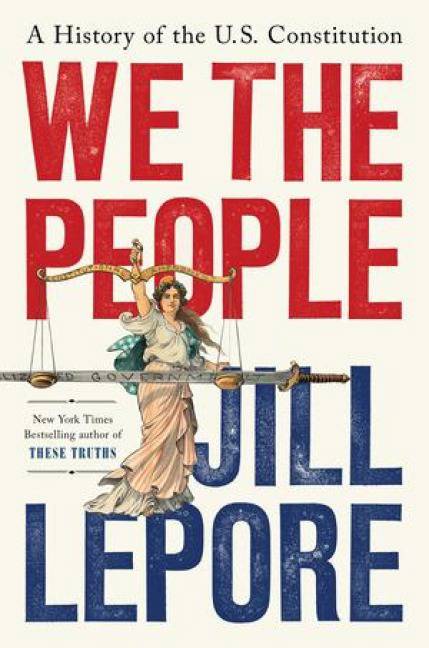
The U.S. Constitution is among the oldest constitutions in the world but also one of the most difficult to amend. Jill Lepore, Harvard professor of history and law, explains why in We the People, the most original history of the Constitution in decades--and an essential companion to her landmark history of the United States, These Truths.
Arriving on the occasion of the 250th anniversary of the nation's founding--the anniversary, too, of the first state constitutions--We the People offers a wholly new history of the Constitution. "One of the Constitution's founding purposes was to prevent change," Lepore writes. "Another was to allow for change without violence." Relying on the extraordinary database she has assembled at the Amendments Project, Lepore recounts centuries of attempts, mostly by ordinary Americans, to realize the promise of the Constitution. Yet nearly all those efforts have failed. Although nearly twelve thousand amendments have been introduced in Congress since 1789, and thousands more have been proposed outside its doors, only twenty-seven have ever been ratified. More troubling, the Constitution has not been meaningfully amended since 1971. Without recourse to amendment, she argues, the risk of political violence rises. So does the risk of constitutional change by presidential or judicial fiat.
Challenging both the Supreme Court's monopoly on constitutional interpretation and the flawed theory of "originalism," Lepore contends in this "gripping and unfamiliar story of our own past" that the philosophy of amendment is foundational to American constitutionalism. The framers never intended for the Constitution to be preserved, like a butterfly, under glass, Lepore argues, but expected that future generations would be forever tinkering with it, hoping to mend America by amending its Constitution through an orderly deliberative and democratic process.
Lepore's remarkable history seeks, too, to rekindle a sense of constitutional possibility. Congressman Jamie Raskin writes that Lepore "has thrown us a lifeline, a way of seeing the Constitution neither as an authoritarian straitjacket nor a foolproof magic amulet but as the arena of fierce, logical, passionate, and often deadly struggle for a more perfect union." At a time when the Constitution's vulnerability is all too evident, and the risk of political violence all too real, We the People, with its shimmering prose and pioneering research, hints at the prospects for a better constitutional future, an amended America.
Arriving on the occasion of the 250th anniversary of the nation's founding--the anniversary, too, of the first state constitutions--We the People offers a wholly new history of the Constitution. "One of the Constitution's founding purposes was to prevent change," Lepore writes. "Another was to allow for change without violence." Relying on the extraordinary database she has assembled at the Amendments Project, Lepore recounts centuries of attempts, mostly by ordinary Americans, to realize the promise of the Constitution. Yet nearly all those efforts have failed. Although nearly twelve thousand amendments have been introduced in Congress since 1789, and thousands more have been proposed outside its doors, only twenty-seven have ever been ratified. More troubling, the Constitution has not been meaningfully amended since 1971. Without recourse to amendment, she argues, the risk of political violence rises. So does the risk of constitutional change by presidential or judicial fiat.
Challenging both the Supreme Court's monopoly on constitutional interpretation and the flawed theory of "originalism," Lepore contends in this "gripping and unfamiliar story of our own past" that the philosophy of amendment is foundational to American constitutionalism. The framers never intended for the Constitution to be preserved, like a butterfly, under glass, Lepore argues, but expected that future generations would be forever tinkering with it, hoping to mend America by amending its Constitution through an orderly deliberative and democratic process.
Lepore's remarkable history seeks, too, to rekindle a sense of constitutional possibility. Congressman Jamie Raskin writes that Lepore "has thrown us a lifeline, a way of seeing the Constitution neither as an authoritarian straitjacket nor a foolproof magic amulet but as the arena of fierce, logical, passionate, and often deadly struggle for a more perfect union." At a time when the Constitution's vulnerability is all too evident, and the risk of political violence all too real, We the People, with its shimmering prose and pioneering research, hints at the prospects for a better constitutional future, an amended America.
Spécifications
Parties prenantes
- Auteur(s) :
- Editeur:
Contenu
- Nombre de pages :
- 768
- Langue:
- Anglais
- Collection :
Caractéristiques
- EAN:
- 9781631496080
- Date de parution :
- 16-09-25
- Format:
- Livre relié
- Format numérique:
- Genaaid
- Dimensions :
- 172 mm x 243 mm
- Poids :
- 1088 g


Seulement chez Librairie Club
+ 110 points sur votre carte client de Librairie Club
Cadeau


Les avis
Nous publions uniquement les avis qui respectent les conditions requises. Consultez nos conditions pour les avis.