


- Retrait en 2 heures
- Assortiment impressionnant
- Paiement sécurisé
- Toujours un magasin près de chez vous
- Retrait en 2 heures
- Assortiment impressionnant
- Paiement sécurisé
- Toujours un magasin près de chez vous



83,95 €
+ 167 points
Description
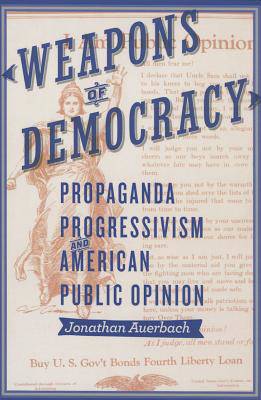
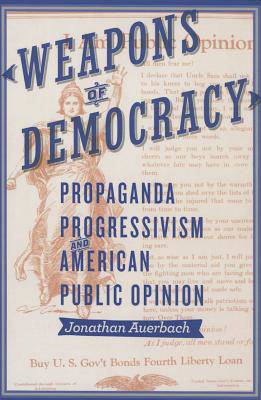
How and why did public opinion--long cherished as a foundation of democratic government--become an increasing source of concern for American Progressives?
Following World War I, political commentator Walter Lippmann worried that citizens increasingly held inaccurate and misinformed beliefs because of the way information was produced, circulated, and received in a mass-mediated society. Lippmann dubbed this manipulative opinion-making process "the manufacture of consent." A more familiar term for such large-scale persuasion would be propaganda. In Weapons of Democracy, Jonathan Auerbach explores how Lippmann's stark critique gave voice to a set of misgivings that had troubled American social reformers since the late nineteenth century.
Progressives, social scientists, and muckrakers initially drew on mass persuasion as part of the effort to mobilize sentiment for their own cherished reforms, including regulating monopolies, protecting consumers, and promoting disinterested, efficient government. "Propaganda" was associated with public education and consciousness raising for the good of the whole. By the second decade of the twentieth century, the need to muster support for American involvement in the Great War produced the Committee on Public Information, which zealously spread the gospel of American democracy abroad and worked to stifle dissent at home. After the war, public relations firms--which treated publicity as an end in itself--proliferated.
Weapons of Democracy traces the fate of American public opinion in theory and practice from 1884 to 1934 and explains how propaganda continues to shape today's public sphere. The book closely analyzes the work of prominent political leaders, journalists, intellectuals, novelists, and corporate publicists, including Woodrow Wilson, Theodore Roosevelt, Mark Twain, George Creel, John Dewey, Julia Lathrop, Ivy Lee, and Edward Bernays. Truly interdisciplinary in both scope and method, this book will appeal to students and scholars in American studies, history, political theory, media and communications, and rhetoric and literary studies.
Spécifications
Parties prenantes
- Auteur(s) :
- Editeur:
Contenu
- Nombre de pages :
- 232
- Langue:
- Anglais
- Collection :
Caractéristiques
- EAN:
- 9781421417363
- Date de parution :
- 29-09-15
- Format:
- Livre relié
- Format numérique:
- Genaaid
- Dimensions :
- 160 mm x 236 mm
- Poids :
- 585 g


Seulement chez Librairie Club
+ 167 points sur votre carte client de Librairie Club
Cadeau


Les avis
Nous publions uniquement les avis qui respectent les conditions requises. Consultez nos conditions pour les avis.