


- Retrait en 2 heures
- Assortiment impressionnant
- Paiement sécurisé
- Toujours un magasin près de chez vous
- Retrait gratuit dans votre magasin Club
- 7.000.0000 titres dans notre catalogue
- Payer en toute sécurité
- Toujours un magasin près de chez vous



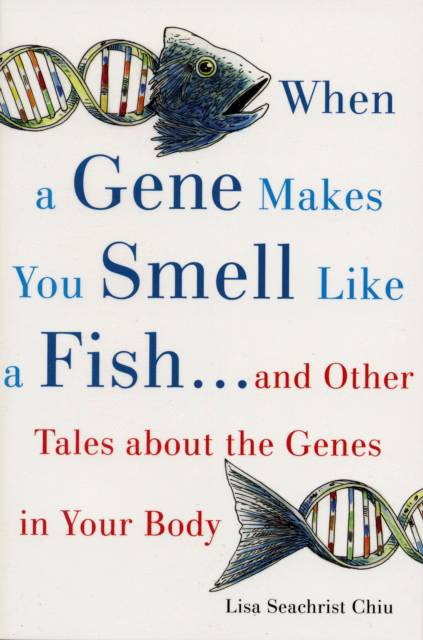
When a Gene Makes You Smell Like a Fish
...and Other Amazing Tales about the Genes in Your Body
Lisa Seachrist Chiu
Livre broché | Anglais
23,95 €
+ 47 points
Format
Description
From the gene that causes people to age prematurely to the "bitter gene" that may spawn broccoli haters, this book explores a few of the more exotic locales on the human genome, highlighting some of the tragic and bizarre ways our bodies go wrong when genes fall prey to mutation and the curious ways in which genes have evolved for our survival.
Lisa Seachrist Chiu has a smorgasbord of stories to tell about rare and not so rare genetic quirks. We read about the Dracula Gene, a mutation in zebra fish that causes blood cells to explode on contact with light, and suites of genes that also influence behavior and physical characteristics; the Tangier Island Gene, first discovered after physicians discovered a boy with orange tonsils (scientists now realize that the child's odd condition comes from an inability to process cholesterol); and Wilson's Disease, a gene defect that fails to clear copper from the body, which can trigger schizophrenia and other neurological symptoms, and can be fatal if left untreated. Friendlier mutations include the Myostatin gene, which allows muscles to become much larger than usual and enhances strength and the much-envied Cheeseburger Gene, which allows a lucky few to eat virtually anything they want and remain razor thin.
While fascinating us with stories of genetic peculiarities, Chiu also manages to effortlessly explain much of the cutting-edge research in modern genetics, resulting in a book that is both informative and entertaining. It is a must read for everyone who loves popular science or is curious about the human body.
Lisa Seachrist Chiu has a smorgasbord of stories to tell about rare and not so rare genetic quirks. We read about the Dracula Gene, a mutation in zebra fish that causes blood cells to explode on contact with light, and suites of genes that also influence behavior and physical characteristics; the Tangier Island Gene, first discovered after physicians discovered a boy with orange tonsils (scientists now realize that the child's odd condition comes from an inability to process cholesterol); and Wilson's Disease, a gene defect that fails to clear copper from the body, which can trigger schizophrenia and other neurological symptoms, and can be fatal if left untreated. Friendlier mutations include the Myostatin gene, which allows muscles to become much larger than usual and enhances strength and the much-envied Cheeseburger Gene, which allows a lucky few to eat virtually anything they want and remain razor thin.
While fascinating us with stories of genetic peculiarities, Chiu also manages to effortlessly explain much of the cutting-edge research in modern genetics, resulting in a book that is both informative and entertaining. It is a must read for everyone who loves popular science or is curious about the human body.
Spécifications
Parties prenantes
- Auteur(s) :
- Editeur:
Contenu
- Nombre de pages :
- 240
- Langue:
- Anglais
Caractéristiques
- EAN:
- 9780195327069
- Date de parution :
- 08-06-07
- Format:
- Livre broché
- Format numérique:
- Trade paperback (VS)
- Dimensions :
- 140 mm x 216 mm
- Poids :
- 317 g


Seulement chez Librairie Club
+ 47 points sur votre carte client de Librairie Club
Cadeau

Cadeau


Les avis
Nous publions uniquement les avis qui respectent les conditions requises. Consultez nos conditions pour les avis.