


- Retrait en 2 heures
- Assortiment impressionnant
- Paiement sécurisé
- Toujours un magasin près de chez vous
- Retrait en 2 heures
- Assortiment impressionnant
- Paiement sécurisé
- Toujours un magasin près de chez vous



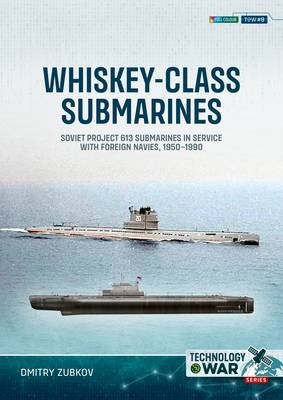
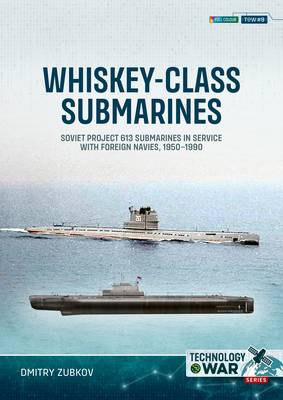
Whiskey-Class Submarines
Soviet Project 613 Submarines in Service with Foreign Navies, 1951-1990
Dmitry Zubkov
27,95 €
+ 55 points
Description
"Richly illustrated with rare archival photographs, maps, and specially commissioned color profiles, this authoritative study offers fresh insight into how a single Soviet design came to embody the Cold War's intersection of technology, ideology, and maritime strategy." - Model Shipwrights
The Soviet Project 613 -- better known in the West as the Whiskey-class -- was among the most influential submarine designs of the early Cold War. Conceived in the late 1940s as a compact, rugged, and easily-produced diesel-electric attack boat, it became the foundation of the post-war Soviet submarine fleet and the principal export design to Moscow's allies and client states. More than 200 were built, and dozens served under foreign flags from the Baltic to the South China Sea.
This volume traces the remarkable story of how these submarines helped shape the naval balance within the Communist and non-aligned worlds. From the formation of fledgling submarine forces in Albania and Bulgaria to the ambitious undersea ambitions of Egypt, Indonesia, and North Korea, the Whiskey-class became both a tool of diplomacy and a weapon of deterrence. These vessels carried Soviet influence into every major regional flashpoint -- from the Mediterranean and the Indian Ocean to East Asia -- and provided smaller navies with an unprecedented capability for covert power projection.
Drawing on original Russian and Eastern Bloc sources, as well as newly declassified Western intelligence material, Dmitry Zubkov examines the political and technological context of each export programme and the operational careers of the boats in service. The book reveals the unique local adaptations and modifications introduced by different navies, and it recounts the often overlooked operational episodes that brought these submarines into contact -- sometimes collision -- with Western forces.
From Indonesia's audacious undersea missions against Dutch colonial forces to North Korea's clandestine operations off Japan, from Albania's defiant use of its small flotilla against both NATO and the Warsaw Pact to Egypt's deployment of submarines during three wars with Israel, Whiskey-Class Submarines provides the first comprehensive English-language account of the type's extraordinary global career.
Richly illustrated with rare archival photographs, maps, and specially commissioned colour profiles, this authoritative study offers fresh insight into how a single Soviet design came to embody the Cold War's intersection of technology, ideology, and maritime strategy.
The Soviet Project 613 -- better known in the West as the Whiskey-class -- was among the most influential submarine designs of the early Cold War. Conceived in the late 1940s as a compact, rugged, and easily-produced diesel-electric attack boat, it became the foundation of the post-war Soviet submarine fleet and the principal export design to Moscow's allies and client states. More than 200 were built, and dozens served under foreign flags from the Baltic to the South China Sea.
This volume traces the remarkable story of how these submarines helped shape the naval balance within the Communist and non-aligned worlds. From the formation of fledgling submarine forces in Albania and Bulgaria to the ambitious undersea ambitions of Egypt, Indonesia, and North Korea, the Whiskey-class became both a tool of diplomacy and a weapon of deterrence. These vessels carried Soviet influence into every major regional flashpoint -- from the Mediterranean and the Indian Ocean to East Asia -- and provided smaller navies with an unprecedented capability for covert power projection.
Drawing on original Russian and Eastern Bloc sources, as well as newly declassified Western intelligence material, Dmitry Zubkov examines the political and technological context of each export programme and the operational careers of the boats in service. The book reveals the unique local adaptations and modifications introduced by different navies, and it recounts the often overlooked operational episodes that brought these submarines into contact -- sometimes collision -- with Western forces.
From Indonesia's audacious undersea missions against Dutch colonial forces to North Korea's clandestine operations off Japan, from Albania's defiant use of its small flotilla against both NATO and the Warsaw Pact to Egypt's deployment of submarines during three wars with Israel, Whiskey-Class Submarines provides the first comprehensive English-language account of the type's extraordinary global career.
Richly illustrated with rare archival photographs, maps, and specially commissioned colour profiles, this authoritative study offers fresh insight into how a single Soviet design came to embody the Cold War's intersection of technology, ideology, and maritime strategy.
Spécifications
Parties prenantes
- Auteur(s) :
- Editeur:
Contenu
- Nombre de pages :
- 90
- Langue:
- Anglais
- Collection :
Caractéristiques
- EAN:
- 9781804515617
- Date de parution :
- 31-01-26
- Format:
- Livre broché
- Format numérique:
- Trade paperback (VS)
- Dimensions :
- 206 mm x 295 mm
- Poids :
- 294 g


Seulement chez Librairie Club
+ 55 points sur votre carte client de Librairie Club
Cadeau


Les avis
Nous publions uniquement les avis qui respectent les conditions requises. Consultez nos conditions pour les avis.