


- Retrait en 2 heures
- Assortiment impressionnant
- Paiement sécurisé
- Toujours un magasin près de chez vous
- Retrait en 2 heures
- Assortiment impressionnant
- Paiement sécurisé
- Toujours un magasin près de chez vous



217,95 €
+ 435 points
Description
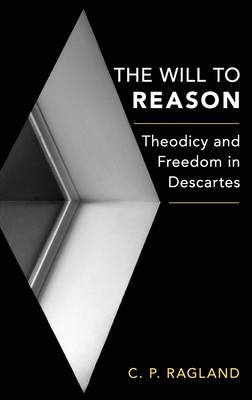
Offering an original perspective on the central project of Descartes' Meditations, this book argues that Descartes' free will theodicy is crucial to his refutation of skepticism. A common thread runs through Descartes' radical First Meditation doubts, his Fourth Meditation discussion of error, and his pious reconciliation of providence and freedom: each involves a clash of perspectives-thinking of God seems to force conclusions diametrically opposed to those we reach when thinking only of ourselves. Descartes fears that a skeptic could exploit this clash of perspectives to argue that Reason is not trustworthy because self-contradictory. To refute the skeptic and vindicate the consistency of Reason, it is not enough for Descartes to demonstrate (in the Third Meditation) that our Creator is perfect; he must also show (in the Fourth) that our errors cannot prove God's imperfection. To do this, Descartes invokes the idea that we err freely. However, prospects initially seem dim for this free will theodicy, because Descartes appears to lack any consistent or coherent understanding of human freedom. In an extremely in-depth analysis spanning four chapters, Ragland argues that despite initial appearances, Descartes consistently offered a coherent understanding of human freedom: for Descartes, freedom is most fundamentally the ability to do the right thing. Since we often do wrong, actual humans must therefore be able to do otherwise-our actions cannot be causally determined by God or our psychology. But freedom is in principle compatible with determinism: while leaving us free, God could have determined us to always do the good (or believe the true). Though this conception of freedom is both consistent and suitable to Descartes' purposes, when he attempts to reconcile it with divine providence, Descartes's strategy fails, running afoul of his infamous doctrine that God created the eternal truths.
Spécifications
Parties prenantes
- Auteur(s) :
- Editeur:
Contenu
- Nombre de pages :
- 272
- Langue:
- Anglais
Caractéristiques
- EAN:
- 9780190264451
- Date de parution :
- 01-04-16
- Format:
- Livre relié
- Format numérique:
- Genaaid
- Dimensions :
- 157 mm x 236 mm
- Poids :
- 498 g


Seulement chez Librairie Club
+ 435 points sur votre carte client de Librairie Club
Cadeau


Les avis
Nous publions uniquement les avis qui respectent les conditions requises. Consultez nos conditions pour les avis.