


- Retrait en 2 heures
- Assortiment impressionnant
- Paiement sécurisé
- Toujours un magasin près de chez vous
- Retrait en 2 heures
- Assortiment impressionnant
- Paiement sécurisé
- Toujours un magasin près de chez vous



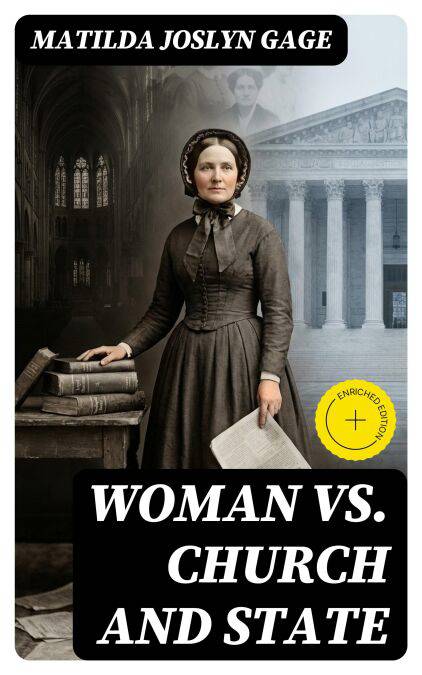
Woman VS. Church and State EBOOK
Enriched edition. A Historical Account
Matilda Joslyn Gage
Ebook | Anglais
1,99 €
+ 1 points
Description
In "Woman VS. Church and State," Matilda Joslyn Gage compellingly navigates the intersecting realms of gender and religion within the socio-political landscape of the late 19th century. Employing a persuasive yet accessible literary style, Gage critically examines the oppressive structures upheld by church and state that have historically marginalized women. This text, situated within the feminist literary tradition, challenges the existing norms of her time, advocating for the emancipation and recognition of women's rights. Gage's meticulous research features an array of contemporary sources, making her arguments both robust and relevant. Matilda Joslyn Gage was a prominent suffragist, abolitionist, and a key figure in the women's rights movement. Her rich background in social activism, along with her personal experiences of discrimination, profoundly influenced her writing. Gage's collaboration with other notable figures, including Susan B. Anthony and Elizabeth Cady Stanton, underscores her commitment to the cause and situates her work within a broader context of civil rights activism that was gaining momentum during her lifetime. "Woman VS. Church and State" is not merely a historical account; it is a clarion call for justice and equality. Gage's eloquent argumentation and unwavering commitment to women's rights offer invaluable insights for contemporary readers. This essential read is not only crucial for those interested in feminist theory and history but also for anyone committed to challenging the status quo and understanding the enduring struggle for women's rights.
In this enriched edition, we have carefully created added value for your reading experience:
- A succinct Introduction situates the work's timeless appeal and themes.
- The Synopsis outlines the central plot, highlighting key developments without spoiling critical twists.
- A detailed Historical Context immerses you in the era's events and influences that shaped the writing.
- A thorough Analysis dissects symbols, motifs, and character arcs to unearth underlying meanings.
- Reflection questions prompt you to engage personally with the work's messages, connecting them to modern life.
- Hand‐picked Memorable Quotes shine a spotlight on moments of literary brilliance.
- Interactive footnotes clarify unusual references, historical allusions, and archaic phrases for an effortless, more informed read.
In this enriched edition, we have carefully created added value for your reading experience:
- A succinct Introduction situates the work's timeless appeal and themes.
- The Synopsis outlines the central plot, highlighting key developments without spoiling critical twists.
- A detailed Historical Context immerses you in the era's events and influences that shaped the writing.
- A thorough Analysis dissects symbols, motifs, and character arcs to unearth underlying meanings.
- Reflection questions prompt you to engage personally with the work's messages, connecting them to modern life.
- Hand‐picked Memorable Quotes shine a spotlight on moments of literary brilliance.
- Interactive footnotes clarify unusual references, historical allusions, and archaic phrases for an effortless, more informed read.
Spécifications
Parties prenantes
- Auteur(s) :
- Editeur:
Contenu
- Nombre de pages :
- 423
- Langue:
- Anglais
Caractéristiques
- EAN:
- 8596547392637
- Date de parution :
- 12-11-22
- Format:
- Ebook
- Protection digitale:
- Digital watermarking
- Format numérique:
- ePub


Seulement chez Librairie Club
+ 1 points sur votre carte client de Librairie Club
Cadeau


Les avis
Nous publions uniquement les avis qui respectent les conditions requises. Consultez nos conditions pour les avis.