


- Retrait en 2 heures
- Assortiment impressionnant
- Paiement sécurisé
- Toujours un magasin près de chez vous
- Retrait en 2 heures
- Assortiment impressionnant
- Paiement sécurisé
- Toujours un magasin près de chez vous



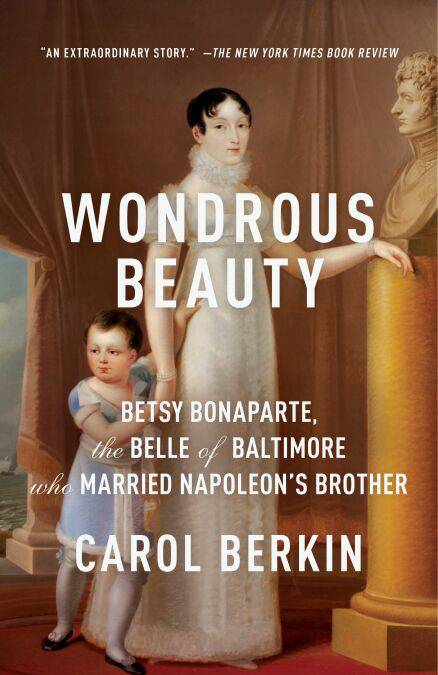
Wondrous Beauty EBOOK
The Life and Adventures of Elizabeth Patterson Bonaparte
Carol Berkin
Ebook | Anglais
11,55 €
+ 11 points
Description
From the award-winning historian and author of Revolutionary Mothers (“Incisive, thoughtful, spiced with vivid anecdotes. Don’t miss it.”—Thomas Fleming) and Civil War Wives (“Utterly fresh . . . Sensitive, poignant, thoroughly fascinating.”—Jay Winik), here is the remarkable life of Elizabeth Patterson Bonaparte, renowned as the most beautiful woman of nineteenth-century Baltimore, whose marriage in 1803 to Jérôme Bonaparte, the youngest brother of Napoleon Bonaparte, became inextricably bound to the diplomatic and political histories of the United States, France, and England.
In Wondrous Beauty, Carol Berkin tells the story of this audacious, outsized life. We see how the news of the union infuriated Napoleon and resulted in his banning the then pregnant Betsy Bonaparte from disembarking in any European port, offering his brother the threat of remaining married to that “American girl” and forfeiting all wealth and power—or renouncing her, marrying a woman of Napoleon’s choice, and reaping the benefits.
Jérôme ended the marriage posthaste and was made king of Westphalia; Betsy fled to England, gave birth to her son and only child, Jérôme’s namesake, and was embraced by the English press, who boasted that their nation had opened its arms to the cruelly abandoned young wife.
Berkin writes that this naïve, headstrong American girl returned to Baltimore a wiser, independent woman, refusing to seek social redemption or a return to obscurity through a quiet marriage to a member of Baltimore’s merchant class. Instead she was courted by many, indifferent to all, and initiated a dangerous game of politics—a battle for a pension from Napoleon—which she won: her pension from the French government arrived each month until Napoleon’s exile.
Using Betsy Bonaparte’s extensive letters, the author makes clear that the “belle of Baltimore” disdained America’s obsession with moneymaking, its growing ethos of democracy, and its rigid gender roles that confined women to the parlor and the nursery; that she sought instead a European society where women created salons devoted to intellectual life—where she was embraced by many who took into their confidence, such as Madame de Staël, Madame Récamier, the aging Marquise de Villette (goddaughter of Voltaire), among others—and where aristocracy, based on birth and breeding rather than commerce, dominated society.
Wondrous Beauty is a riveting portrait of a woman torn between two worlds, unable to find peace in either—one a provincial, convention-bound new America; the other a sophisticated, extravagant Old World Europe that embraced freedoms, a Europe ultimately swallowed up by decadence and idleness.
A stunning revelation of an extraordinary age.
In Wondrous Beauty, Carol Berkin tells the story of this audacious, outsized life. We see how the news of the union infuriated Napoleon and resulted in his banning the then pregnant Betsy Bonaparte from disembarking in any European port, offering his brother the threat of remaining married to that “American girl” and forfeiting all wealth and power—or renouncing her, marrying a woman of Napoleon’s choice, and reaping the benefits.
Jérôme ended the marriage posthaste and was made king of Westphalia; Betsy fled to England, gave birth to her son and only child, Jérôme’s namesake, and was embraced by the English press, who boasted that their nation had opened its arms to the cruelly abandoned young wife.
Berkin writes that this naïve, headstrong American girl returned to Baltimore a wiser, independent woman, refusing to seek social redemption or a return to obscurity through a quiet marriage to a member of Baltimore’s merchant class. Instead she was courted by many, indifferent to all, and initiated a dangerous game of politics—a battle for a pension from Napoleon—which she won: her pension from the French government arrived each month until Napoleon’s exile.
Using Betsy Bonaparte’s extensive letters, the author makes clear that the “belle of Baltimore” disdained America’s obsession with moneymaking, its growing ethos of democracy, and its rigid gender roles that confined women to the parlor and the nursery; that she sought instead a European society where women created salons devoted to intellectual life—where she was embraced by many who took into their confidence, such as Madame de Staël, Madame Récamier, the aging Marquise de Villette (goddaughter of Voltaire), among others—and where aristocracy, based on birth and breeding rather than commerce, dominated society.
Wondrous Beauty is a riveting portrait of a woman torn between two worlds, unable to find peace in either—one a provincial, convention-bound new America; the other a sophisticated, extravagant Old World Europe that embraced freedoms, a Europe ultimately swallowed up by decadence and idleness.
A stunning revelation of an extraordinary age.
Spécifications
Parties prenantes
- Auteur(s) :
- Editeur:
Contenu
- Nombre de pages :
- 256
- Langue:
- Anglais
Caractéristiques
- EAN:
- 9780385351621
- Date de parution :
- 10-02-14
- Format:
- Ebook
- Protection digitale:
- Adobe DRM
- Format numérique:
- ePub


Seulement chez Librairie Club
+ 11 points sur votre carte client de Librairie Club
Cadeau


Les avis
Nous publions uniquement les avis qui respectent les conditions requises. Consultez nos conditions pour les avis.