


- Retrait en 2 heures
- Assortiment impressionnant
- Paiement sécurisé
- Toujours un magasin près de chez vous
- Retrait en 2 heures
- Assortiment impressionnant
- Paiement sécurisé
- Toujours un magasin près de chez vous



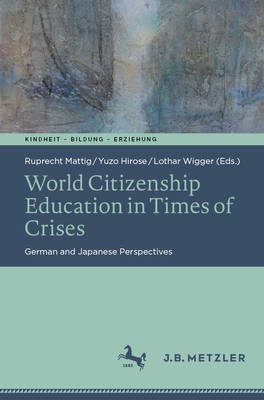
World Citizenship Education in Times of Crises
German and Japanese Perspectives
108,45 €
+ 216 points
Description
The book develops the concept of world citizenship education, drawing on German and Japanese traditions of educational thought to offer new perspectives on cosmopolitanism and global citizenship. It argues that education must prepare future generations for international cooperation and solidarity in facing crises like war, migration, and climate change. Unlike global citizenship education, which is tied to problematic notions of globalization, world citizenship education uses the idea of world (German: 'Welt', Japanese: 'sekai') as a relational framework linking humans, culture, society, and nature. Based on a German-Japanese collaboration, the eleven chapters explore empirical, historical, and theoretical approaches to world citizen education for educators working in international contexts.
Spécifications
Parties prenantes
- Editeur:
Contenu
- Nombre de pages :
- 173
- Langue:
- Anglais
- Collection :
Caractéristiques
- EAN:
- 9783662730256
- Date de parution :
- 17-07-26
- Format:
- Livre broché
- Format numérique:
- Trade paperback (VS)
- Dimensions :
- 155 mm x 235 mm

Seulement chez Librairie Club
+ 216 points sur votre carte client de Librairie Club
Cadeau


Les avis
Nous publions uniquement les avis qui respectent les conditions requises. Consultez nos conditions pour les avis.