


- Retrait en 2 heures
- Assortiment impressionnant
- Paiement sécurisé
- Toujours un magasin près de chez vous
- Retrait gratuit dans votre magasin Club
- 7.000.0000 titres dans notre catalogue
- Payer en toute sécurité
- Toujours un magasin près de chez vous



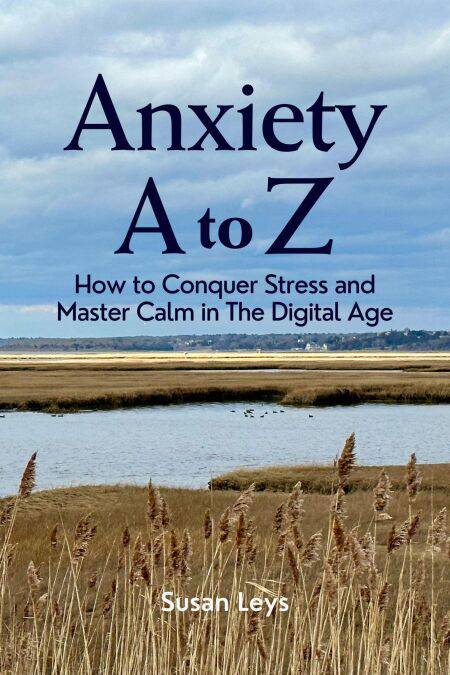
Anxiety A to Z: How to Conquer Stress and Master Calm in the Digital Age EBOOK
Mental Wellness Essentials
Susan Leys
12,99 €
+ 12 points
Description
At two in the morning, when your thoughts are racing and sleep feels impossible, the last thing you need is a book that requires reading from page one. You need a book you can open to the letter M and find a meditation technique that works right now. Or turn to B and learn a breathing exercise that calms your nervous system in under sixty seconds. Or flip to G and use a grounding method that pulls you out of a spiral before it takes over.
That's exactly what Anxiety A to Z was designed to do.
Unlike traditional anxiety books that ask you to read cover to cover before you get any relief, this guide is structured alphabetically, putting twenty-six evidence-based strategies at your fingertips. From Acceptance to Zen Practices, each chapter is a self-contained tool you can use immediately, in the order you need it, when you need it. Having a panic attack? Go to B for Breathing. Stuck in a loop of catastrophic thinking? Try C for Cognitive Behavioral Therapy techniques. Can't stop scrolling your phone at midnight and feeling worse with every headline? Look under D for Distraction Methods that actually redirect your brain instead of numbing it.
Susan Leys didn't write this book from behind a desk. She wrote it from more than thirty years of working in emergency psychiatry and crisis management, where she watched anxiety show up in every form it takes: the executive who couldn't sleep, the nurse who couldn't stop worrying about her patients after she clocked out, the parent whose chest tightened every time their phone buzzed, the teenager who stopped going to school because the world felt too loud and too fast.
Anxiety in the digital age doesn't look the way it looked a generation ago. It's fueled by constant notifications, twenty-four-hour news cycles, social media comparison, information overload, and the relentless feeling that you should be doing more, being more, handling everything better than you are. The strategies in this book are designed specifically for that reality. They're not theoretical. They're not complicated. They're the same tools Susan has taught thousands of healthcare professionals to use when they're overwhelmed, overstimulated, and running on empty.
Every technique is grounded in published psychological research, from cognitive behavioral approaches to mindfulness-based stress reduction to the neuroscience of how anxiety hijacks your brain and what you can do to interrupt it. But you don't need to understand the science to use the tools. Each chapter gives you what you need in plain, clear language: what the technique is, why it works, and exactly how to do it.
Whether you're managing the kind of low-grade, always-humming anxiety that makes modern life feel harder than it should, or you're dealing with acute episodes that stop you in your tracks, this book meets you where you are.
Keep it on your nightstand. Keep it in your bag. Open it to any letter and start there. Relief isn't at the end of the book. It's on whatever page you need right now.
Spécifications
Parties prenantes
- Auteur(s) :
- Editeur:
Contenu
- Langue:
- Anglais
- Collection :
Caractéristiques
- EAN:
- 9798231554652
- Date de parution :
- 31-08-25
- Format:
- Ebook
- Protection digitale:
- /
- Format numérique:
- ePub



Seulement chez Librairie Club
+ 12 points sur votre carte client de Librairie Club
Cadeau

Cadeau


Les avis
Nous publions uniquement les avis qui respectent les conditions requises. Consultez nos conditions pour les avis.