


- Retrait en 2 heures
- Assortiment impressionnant
- Paiement sécurisé
- Toujours un magasin près de chez vous
- Retrait en 2 heures
- Assortiment impressionnant
- Paiement sécurisé
- Toujours un magasin près de chez vous



90,10 €
+ 180 points
Description
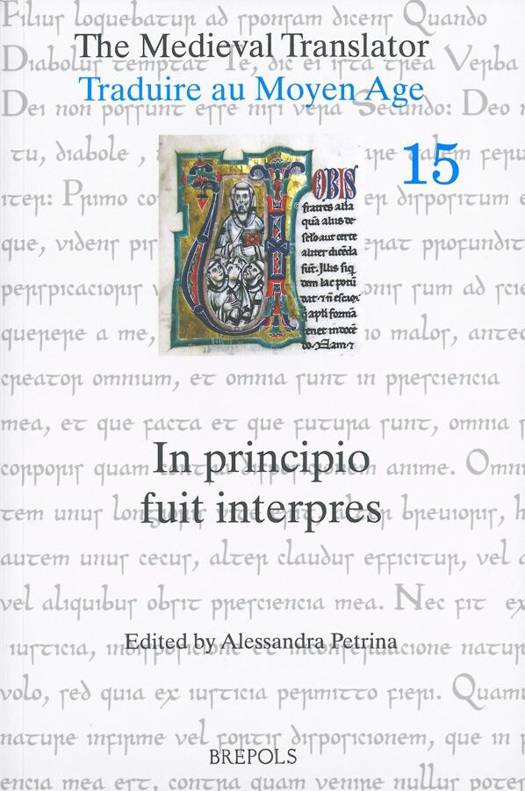
Translation studies centering on medieval texts have prompted new ways to look at the texts themselves, but also at the exchange and transmission of culture in the European Middle Ages, inside and outside Europe. The present volume reflects, in the range and scope of its essays, the itinerant nature of the Medieval Translator Conference, at the same time inviting readers to reflect on the geography of medieval translation. By dividing the essays presented here into four groups, the volume highlights lines of communication and shifts in areas of interest, connecting the migrating nature of the translated texts to the cultural, political and linguistic factors underlying the translation process. Translation was, in each case under discussion, the result or the by-product of a transnational movement that prompted the circulation of ideas and texts within religious and/or political discussion and exchange. Thus the volume opens with a group of contributions discussing the cultural exchange between Western Europe and the Middle East, identifying the pivotal role of Church councils, aristocratic courts, and monasteries in the production of translation. The following section concentrates on the literary exchanges between three close geographical and cultural areas, today identifiable with France, Italy and England, allowing us to re-think traditional hypotheses on sites of literary production, and to reflect on the triangulation of language and manuscript exchange. From this triangulation the book moves into a closer discussion of translations produced in England, showing in the variety and chronological span covered by the contributions the development of a rich cultural tradition in constant dialogue with Latin as well as contemporary vernaculars. The final essays offer a liminal view, considering texts translated into non-literary forms, or the role played by the onset of printing in the dissemination of translation, thus highlighting the continuity and closeness of medieval translation with the Renaissance.
Spécifications
Parties prenantes
- Auteur(s) :
- Editeur:
Contenu
- Nombre de pages :
- 384
- Langue:
- Français
- Collection :
- Tome:
- n° 15
Caractéristiques
- EAN:
- 9782503549095
- Date de parution :
- 03-07-13
- Format:
- Livre broché
- Format numérique:
- Trade paperback (VS)
- Dimensions :
- 160 mm x 236 mm
- Poids :
- 657 g


Seulement chez Librairie Club
+ 180 points sur votre carte client de Librairie Club
Cadeau


Les avis
Nous publions uniquement les avis qui respectent les conditions requises. Consultez nos conditions pour les avis.