


- Retrait en 2 heures
- Assortiment impressionnant
- Paiement sécurisé
- Toujours un magasin près de chez vous
- Retrait en 2 heures
- Assortiment impressionnant
- Paiement sécurisé
- Toujours un magasin près de chez vous



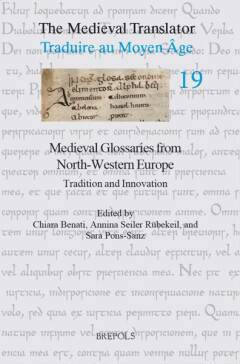
Medieval Glossaries from North-Western Europe
Tradition and Innovation
Annina Seiler, Chiara Benati, Sara M Pons-Sanz
143,10 €
+ 286 points
Description
Glossaries are the dictionaries of the medieval period. They were created at a time when no comprehensive dictionary of the Latin language existed, but lexicographical resources were urgently needed to engage with the writings of Classical and Late Antiquity as well as near-contemporary texts. In the non-Romance speaking areas in north-western Europe, the compilers of glossaries were quick to have recourse to their vernacular languages. Glossaries are often the places in which these languages were put into writing for the first time. Hence, the effort to explain Latin vocabulary resulted in bilingual lexicography and in the establishment of the vernaculars as written languages in their own right. The negotiation of linguistic and cultural barriers lies at the centre of the glossaries. Consequently, medieval traditions of glossography are highly interconnected. This volume represents the first reference work dedicated to medieval glossaries in English and related traditions, including other languages spoken in the British Isles (Celtic languages, Anglo-Norman) and the Germanic languages (High and Low German, Dutch, Scandinavian, Gothic). As such, it is intended as a vademecum for researchers in order to facilitate modern approaches to medieval glossography, lexicology and lexicography, which often require some familiarity with different traditions. Written by experts in the field, the fifty chapters of this volume highlight important characteristics and themes of medieval glossaries and outline different glossographic traditions; they facilitate access to individual glossaries, or groups of related glossaries, by providing detailed discussions of the texts, their sources, relationships and transmission; they also give an account of the current state of research and highlight important resources.
Spécifications
Parties prenantes
- Auteur(s) :
- Editeur:
Contenu
- Nombre de pages :
- 762
- Langue:
- Anglais
- Collection :
- Tome:
- n° 19
Caractéristiques
- EAN:
- 9782503584577
- Date de parution :
- 20-07-23
- Format:
- Livre broché
- Format numérique:
- Trade paperback (VS)
- Dimensions :
- 155 mm x 234 mm
- Poids :
- 1279 g


Seulement chez Librairie Club
+ 286 points sur votre carte client de Librairie Club
Cadeau


Les avis
Nous publions uniquement les avis qui respectent les conditions requises. Consultez nos conditions pour les avis.