


- Retrait en 2 heures
- Assortiment impressionnant
- Paiement sécurisé
- Toujours un magasin près de chez vous
- Retrait en 2 heures
- Assortiment impressionnant
- Paiement sécurisé
- Toujours un magasin près de chez vous



36,95 €
+ 73 points
Description
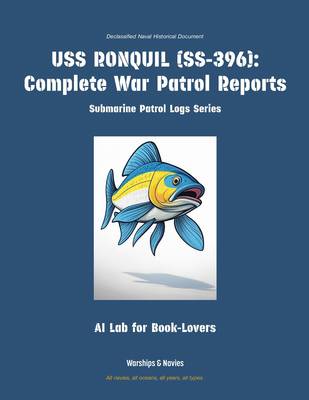
"Twenty (20) Mark 18-2 and two Mark 18-1 torpedoes were expended. Three Mark 18-2 torpedoes were fired with a six (6) foot depth setting in a force two (2) sea and ran hot, straight, and normal." These sparse lines from the USS Ronquil's official war patrol documentation reveal far more than tactical data. They expose the grinding reality of submarine warfareâ "the constant struggle against unreliable weapons, unpredictable seas, and the razor-thin margins between success and catastrophic failure. This technical notation, preserved in declassified naval archives, captures a moment when American submariners had to master not only enemy detection and evasion but also the temperamental Mark 18 torpedo system that too often betrayed them. The crew's meticulous documentation of torpedo performance, depth settings, and maintenance challenges stands as testament to their engineering expertise under extraordinary pressure. Every carefully recorded detail represents lives depending on split-second decisions and equipment that demanded absolute reliability in the unforgiving depths of the Pacific. This extraordinary volume presents the complete, declassified War Patrol Reports of USS Ronquil (SS-396), one of the most significant primary source collections for understanding American submarine operations during World War II. These are not sanitized histories or retrospective accountsâ "they are the raw, official records filed by commanding officers and crews who lived through some of the Pacific War's most intense combat operations. For naval historians, military researchers, and dedicated WWII enthusiasts, this compilation represents an unparalleled window into submarine warfare as it actually unfolded, complete with technical specifications, tactical decisions, personnel evaluations, and the human drama that defined underwater combat. The USS Ronquil's patrol reports document everything from pre-attack reconnaissance and target identification to post-engagement damage assessments and crew performance under fire. Readers gain access to firsthand accounts of surface engagements, torpedo attacks, depth charge barrages, and the psychological toll of extended patrols in hostile waters. The reports include detailed ship recognition data, enemy vessel specifications, engagement coordinates, and the commanding officer's candid assessments of crew performance and equipment reliability. This is the kind of granular, contemporaneous documentation that transforms abstract historical understanding into visceral, human-centered narrative. What makes this collection particularly valuable is its completeness. Rather than sanitized summaries or edited highlights, you receive the full patrol reports exactly as filedâ "including the technical frustrations, the near-misses, the equipment failures, and the crew's innovative solutions to combat challenges. Researchers will find extensive material on Mark 18 torpedo performance, submarine tactics during different phases of the Pacific War, Japanese anti-submarine measures, and the evolution of American submarine doctrine. Military strategists and naval engineers can trace how doctrine and technology adapted in real-time based on operational experience. This volume appeals to multiple audiences: serious historians seeking primary source documentation, naval officers studying historical submarine operations, military technology enthusiasts interested in torpedo systems and submarine design, and general readers fascinated by World War II's most secretive theater. Whether you're researching a specific patrol, studying submarine tactics, or exploring the human experience of underwater combat, these declassified reports provide irreplaceable insight. In an era when original documents are increasingly digitized and di...
Spécifications
Parties prenantes
- Auteur(s) :
- Editeur:
Contenu
- Nombre de pages :
- 284
- Langue:
- Anglais
- Collection :
- Tome:
- n° 44
Caractéristiques
- EAN:
- 9781608884919
- Date de parution :
- 08-09-26
- Format:
- Livre broché
- Format numérique:
- Trade paperback (VS)
- Dimensions :
- 216 mm x 279 mm
- Poids :
- 662 g


Seulement chez Librairie Club
+ 73 points sur votre carte client de Librairie Club
Cadeau


Les avis
Nous publions uniquement les avis qui respectent les conditions requises. Consultez nos conditions pour les avis.