


- Retrait en 2 heures
- Assortiment impressionnant
- Paiement sécurisé
- Toujours un magasin près de chez vous
- Retrait en 2 heures
- Assortiment impressionnant
- Paiement sécurisé
- Toujours un magasin près de chez vous



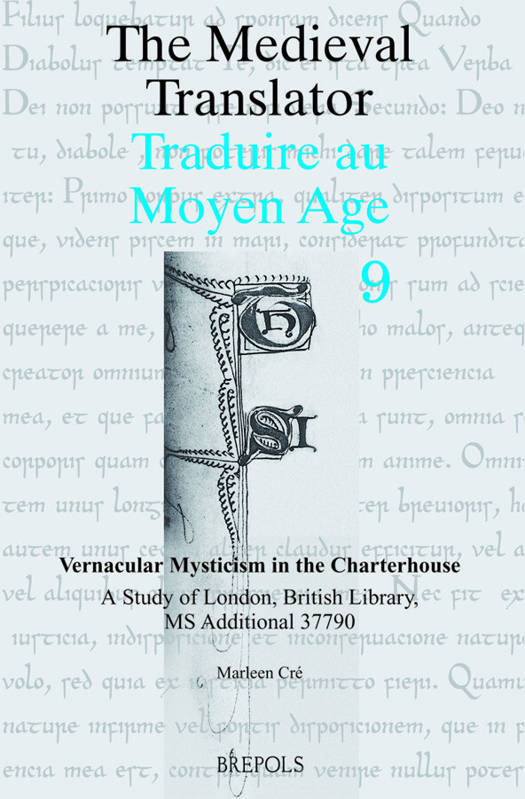
Vernacular Mysticism in the Charterhouse
A Study of London, British Library, MS Additional 37790
M. Cré
68,90 €
+ 137 points
Description
The first monograph to appear in The Medieval Translator series, Vernacular Mysticism in the Charterhouse presents a study of London, British Library, MS Additional 37790 (Amherst), a purpose-built anthology of major mystical texts by Richard Rolle, Julian of Norwich, Jan van Ruusbroec and Marguerite Porete, interspersed with shorter texts and compilations. Though the manuscript is famous mainly because it contains the only extant copy of Julian of Norwich's short text, it is an intriguing witness to the fifteenth-century spread of the vernacular into traditionally Latinate environments, in this case the Carthusian Order in England. In this process of transmission, translation plays a central part. Most of the texts in the anthology are translations from Latin or French into Middle English. In addition, the anthologist's selection and ordering of texts within the volume, intended to further the readers' spiritual lives, translates them anew for his intended audience. This study provides finely detailed analyses of the texts in the textual and material context of the Amherst anthology as well as in their religious and historical contexts. It also offers a first-time edition of Quedam introductiua extracta, a Latin compilation contained in the manuscript, and a discussion and listing of verbal marginal annotations reflecting early readers' reactions to the texts. By reading the texts in (one of) their medieval manuscript context(s), this book gives students and scholars of (translated) medieval religious texts a fresh view of the classics of mystical writing contained in the remarkable literary document that is the Amherst anthology.
Spécifications
Parties prenantes
- Auteur(s) :
- Editeur:
Contenu
- Nombre de pages :
- 373
- Langue:
- Anglais
- Collection :
- Tome:
- n° 9
Caractéristiques
- EAN:
- 9782503521329
- Date de parution :
- 29-09-06
- Format:
- Livre broché
- Format numérique:
- Trade paperback (VS)
- Dimensions :
- 157 mm x 230 mm
- Poids :
- 639 g


Seulement chez Librairie Club
+ 137 points sur votre carte client de Librairie Club
Cadeau


Les avis
Nous publions uniquement les avis qui respectent les conditions requises. Consultez nos conditions pour les avis.